
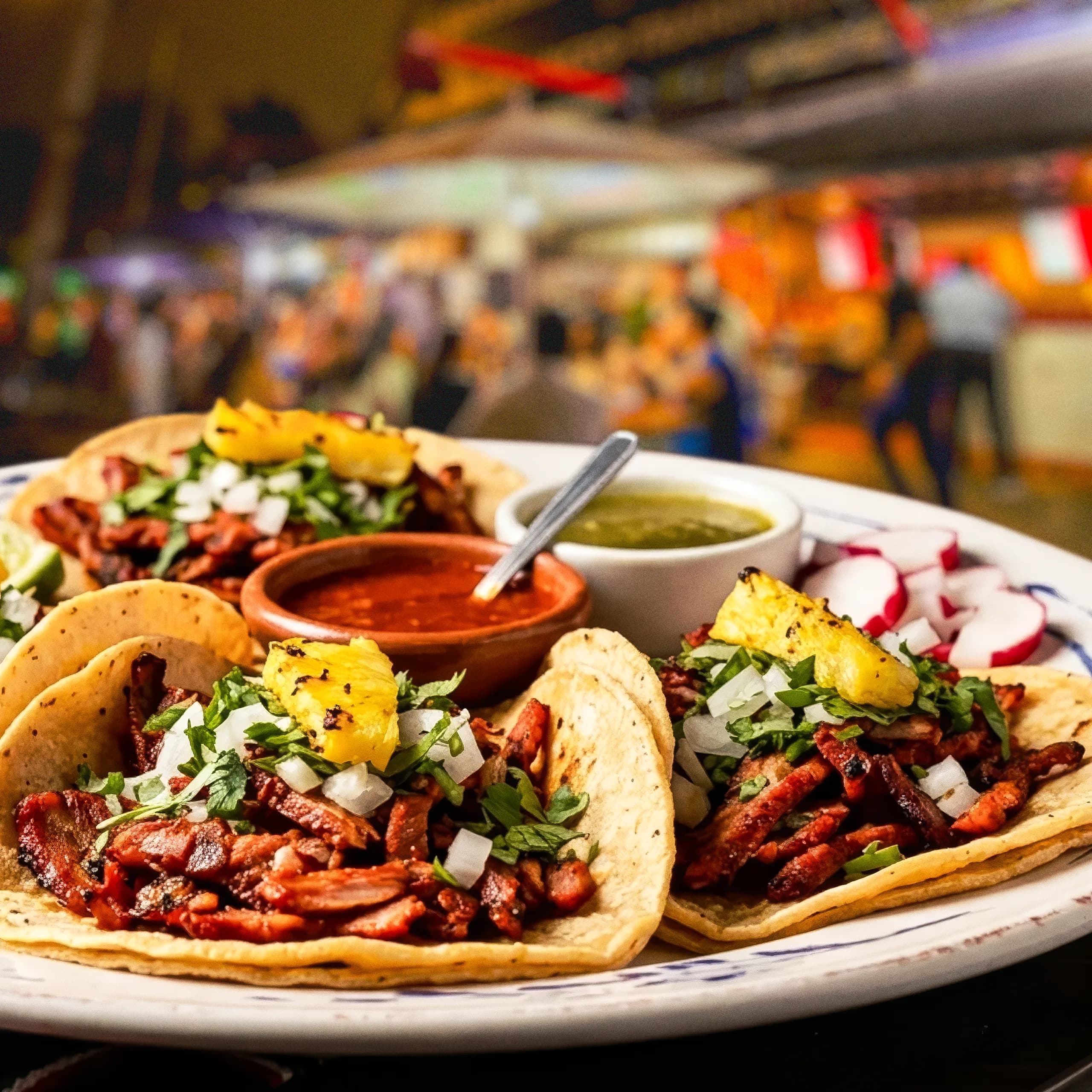
From Shawarma to the Trompo: Tacos al Pastor and the Lebanese Connection
How a Levantine spit-roasting technique passed through Puebla, found its taquería rhythm in Mexico City, and became one of Mexico’s most recognizable flavors
By LUUMHAUS
| Last Reviewed:
It is six in the morning. The taquerías are still closed, but the night has already begun to prepare itself.
At the markets, metal shutters rise one after another. Scales take their place on the counters, knives meet the cutting boards, and the first crates of produce begin to pass from hand to hand. White onions arrive alongside bunches of cilantro still damp from the fields, limes, garlic, and dried chiles. Some ingredients come from nearby plots; others have traveled through the night to reach a warehouse or the aisles of a wholesale market just in time.
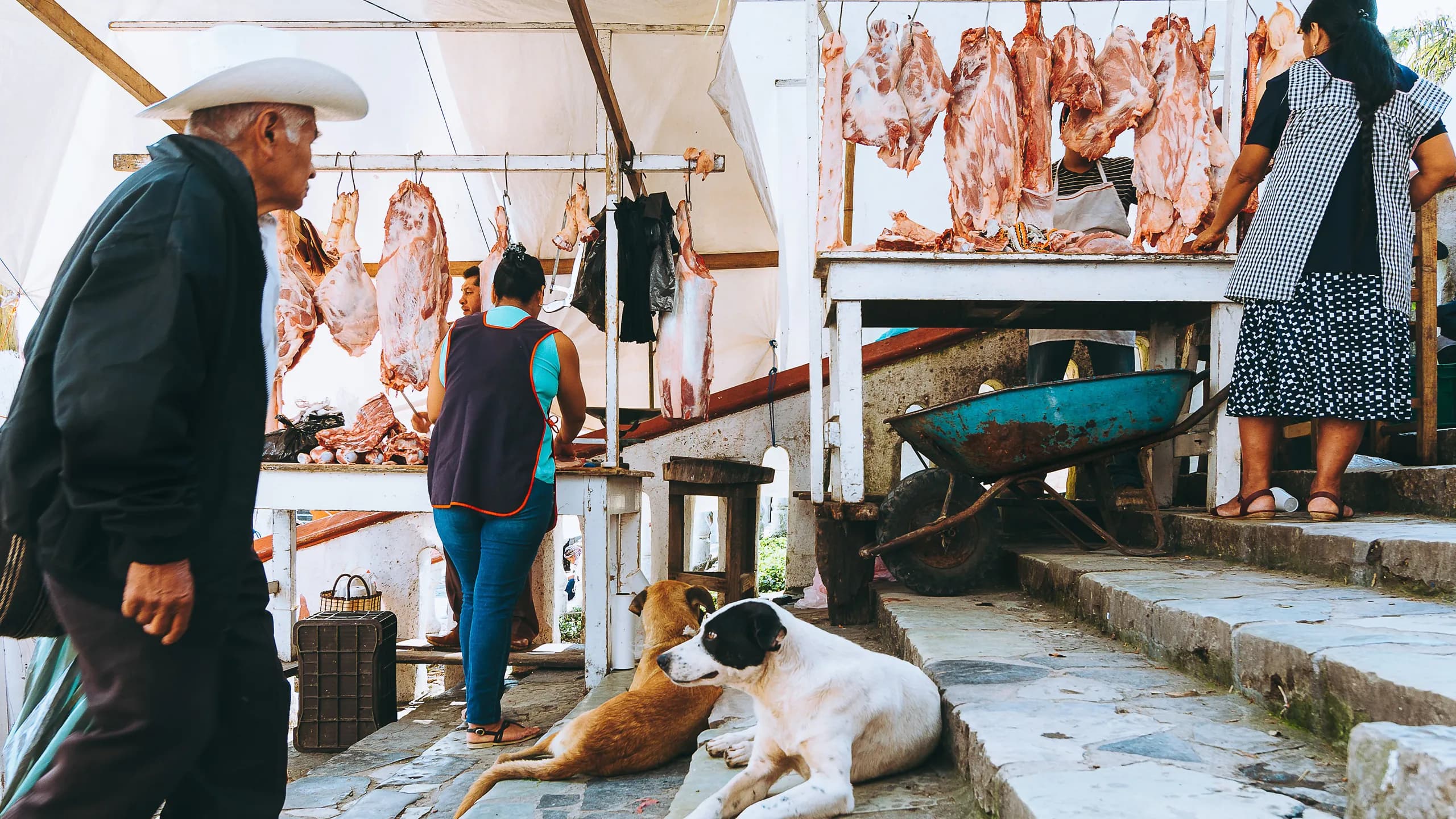
At another end of the market, experienced butchers trim, clean, and slice the meat. Pork legs and shoulders become thin, even sheets, ready to take on the marinade and hold their place on the skewer. It is not yet a trompo, but its future shape is already beginning to appear across the table.
The chiles are softened. The garlic is ground. Vinegar, citrus, and spices come together in a red paste, deep in color and aroma. Every taquería guards its own proportions. Some recipes are written down; others pass from one generation to the next through spoonfuls measured by instinct, handfuls of spice, and a memory that knows the right point without needing a scale.
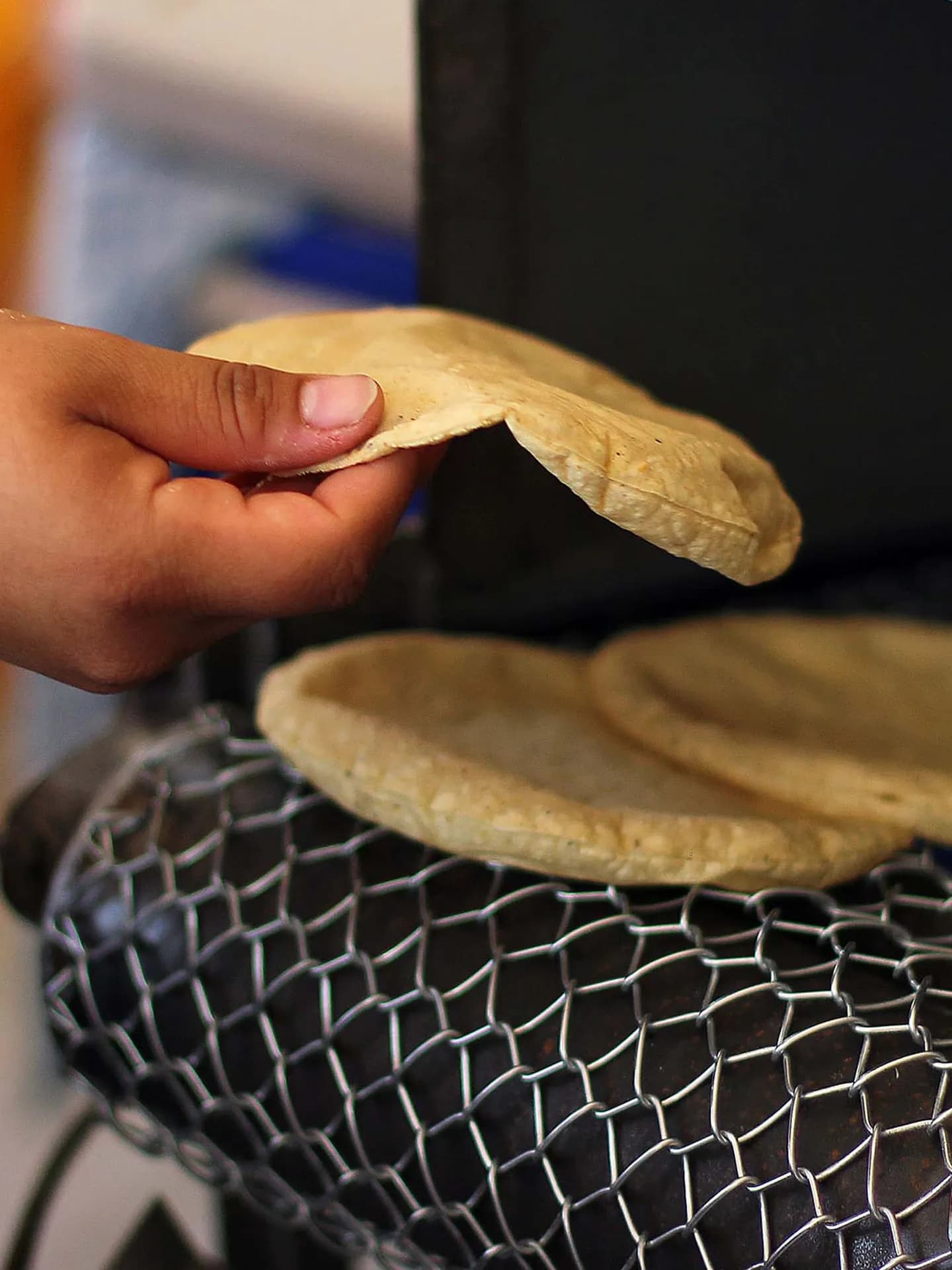
While the meat rests, another rhythm begins inside the tortillerías. The machines wake with a steady percussion. The masa moves forward, flattens, and enters the heat. Tortilla after tortilla falls warm onto the belt, releasing the scent of cooked corn that belongs to Mexico’s everyday landscape. The pulse of the tortilla machine, the knock of the knife, and the murmur of the market form an accidental chorus. Service is still hours away, but the performance is already underway.
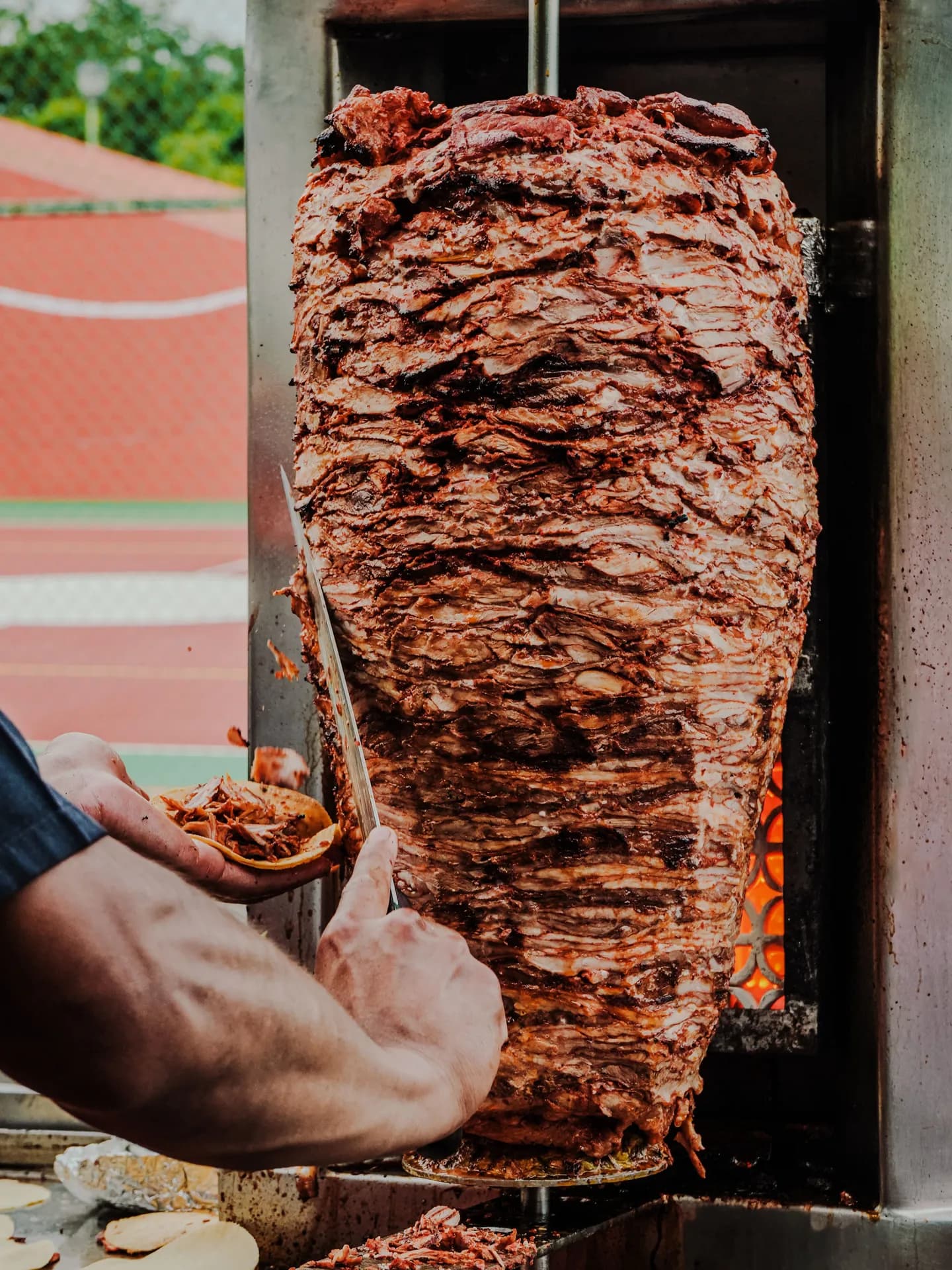
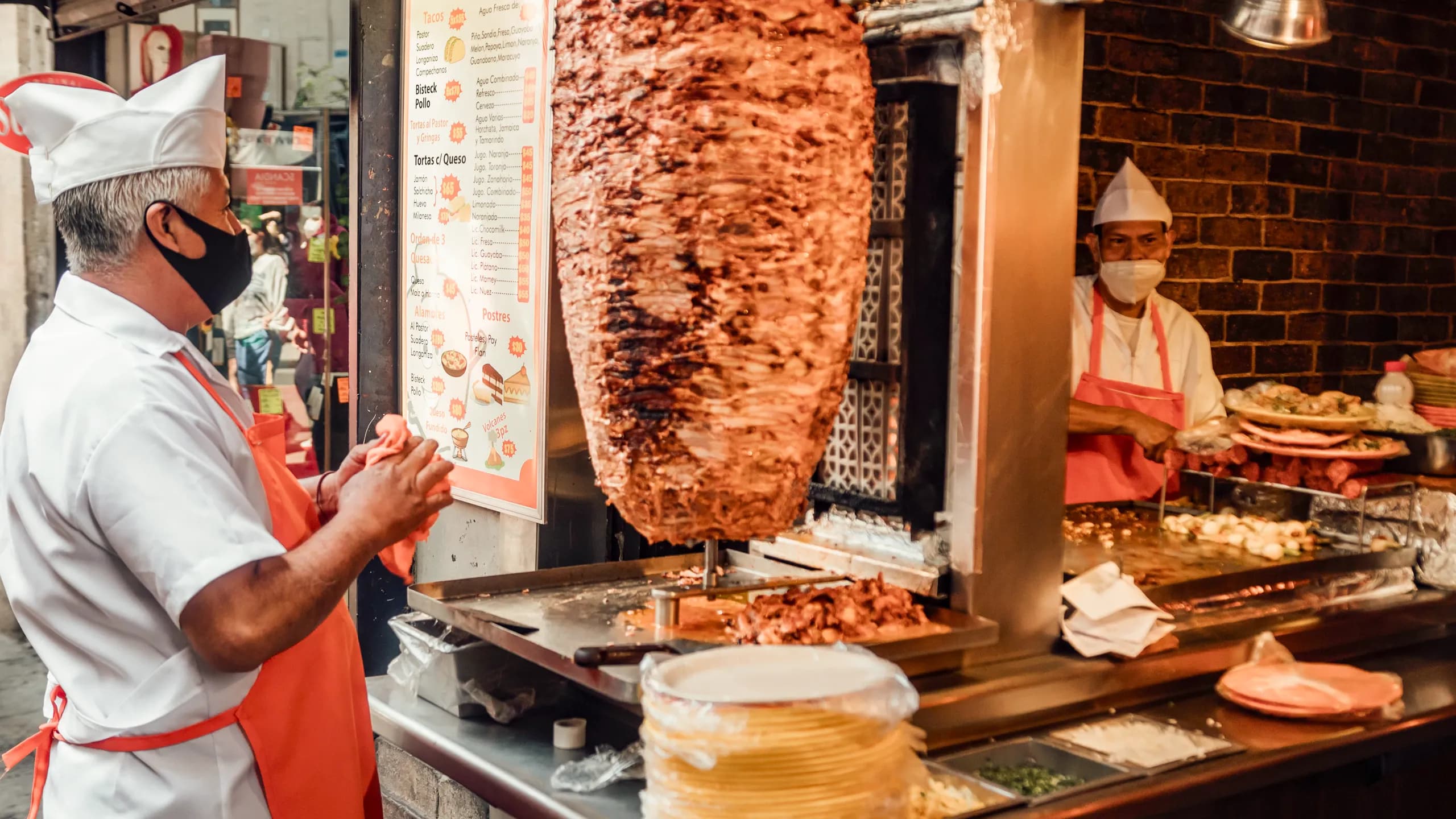
Around midday, the assembly begins. The marinated pork is threaded onto the vertical skewer one piece at a time. Layer upon layer, the meat rises into a compact cone. A slice of pineapple may crown it; an onion may anchor the base. In front of it, the flame waits.
At seven in the evening, the scene changes. Offices begin to empty and shops slow their pace. Across cities, towns, and neighborhoods, the signs of the taquerías flicker on. Plastic tables, metal stools, bottles of salsa, and plates of radishes, onion, and cucumber appear. The trompo begins to turn.
There is no official hour for tacos. They can be a quick dinner, the meeting point before the night continues, or the final craving before heading home. Yet tacos al pastor belong especially to dusk and darkness, when the flame becomes visible from the sidewalk and the aroma of marinated pork begins to travel down the street.
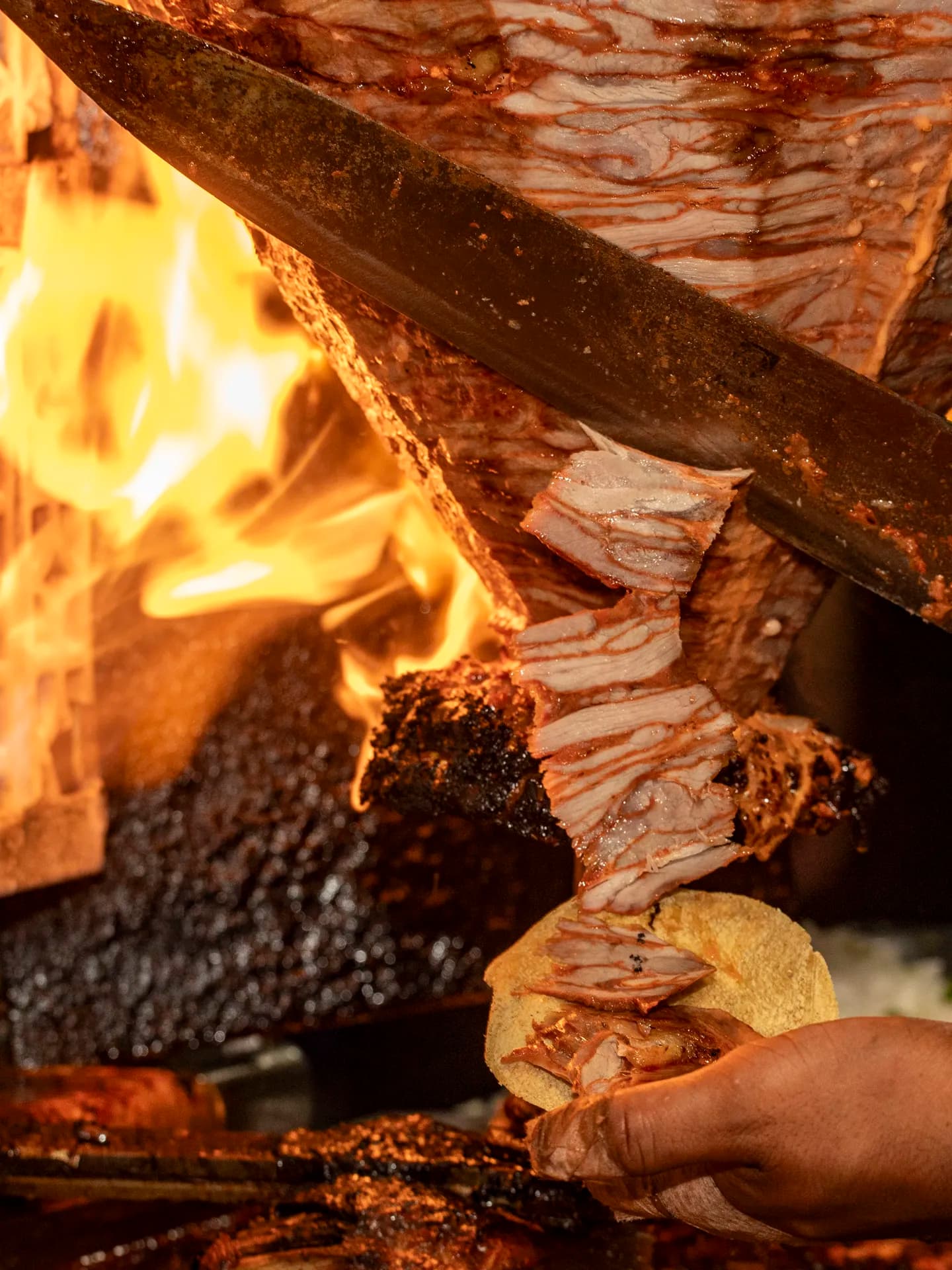
The taquero watches. He does not cut yet. He waits for the fat to begin to shine, for the edges to toast, and for the surface to reach that exact point between browned and juicy. Then the long knife enters. One, two, three ribbons fall onto a warm tortilla. Onion, cilantro, salsa, and lime follow —and in some taquerías, a piece of pineapple flies down from the top of the trompo.
The taco disappears in only a few bites. But its story began many hours earlier: in the fields, the market, the butcher shop, the tortillería, and the hands that raised that tower of meat, layer by layer, before the fire.
To understand why that trompo turns today on the streets of Mexico, we have to travel back much farther than a single day. We have to return to the late nineteenth and early twentieth centuries, when communities from the Middle East arrived in Mexico carrying their own ways of trading, cooking, and gathering around the table. Among those traditions traveled a technique that would permanently change Mexican street food: meat roasted on a vertical spit.
Before al pastor, there was shawarma. Before the corn tortilla, there was pan árabe. And before the trompo became one of Mexico’s great nighttime spectacles, there was a story of migration, adaptation, and cultures meeting around the flame.
The Lebanese Connection: A Wider Story
The most familiar version begins with Lebanese immigrants arriving in Mexico between the late nineteenth and early twentieth centuries. They brought culinary traditions from the eastern Mediterranean, including shawarma: thin layers of seasoned meat assembled on a vertical spit, roasted beside a flame, and shaved away as the surface browned.
Lebanese communities settled in several parts of the country, including Yucatán, Veracruz, Puebla, and Mexico City. Their presence became woven into Mexico’s commercial, social, and culinary life, and the vertical shawarma spit is widely recognized as the technical ancestor of the al pastor trompo.
Even so, speaking only of a “Lebanese connection” compresses a much broader Arab and Levantine history. Accounts of Puebla’s earliest tacos árabes often mention the Tabe and Galeana families, whose origins some researchers trace to Iraq rather than Lebanon. Both arrived in Puebla during the first half of the twentieth century and became associated with businesses that transformed Middle Eastern-style roasted meat into a preparation suited to local ingredients and tastes. The surviving accounts do not always agree, and culinary historians caution that the identity of the first al pastor taquería is not fully documented.
The absence of a single definitive account does not diminish the taco. It makes the way it evolved even more revealing.
Al pastor was not born in one instant or from one recipe. It emerged through adjustments made by migrant families, Mexican-born descendants, taqueros, and diners. Each generation changed the preparation until a technique carried from another continent began to speak in the language of Mexican cooking.
Puebla: Where the Taco Árabe Took Shape
Puebla became the decisive point of transformation. In the earliest versions associated with the city, meat was stacked on a vertical spit and served inside a soft wheat flatbread known as pan árabe. Its kinship with shawarma remained visible, but the filling had begun to change.
Lamb was more expensive and less accessible than pork. It also held a smaller place in everyday Pueblan cooking. Pork, by contrast, was familiar, readily available, and deeply established in the regional diet. Early operators began using it in thin slices, adjusting both the cost and the flavor to the preferences of local diners.
Antigua Taquería La Oriental traces its origins to 1933 and recounts the gradual incorporation of regional elements such as corn tortillas, tortas de agua, and a chipotle-based salsa. Family histories likewise describe the shift from lamb to pork as a response to price, availability, and the tastes of Puebla.
The result was the taco árabe: seasoned pork cooked on a vertical spit and served in wheat bread, usually with lime and a dark, smoky chipotle salsa. It was not yet the taco al pastor now eaten throughout Mexico. But its essential structure was already there: layered meat, vertical fire, precise slicing, and service in the moment.
When Adaptation Became Invention
The defining transformation came when the preparation moved fully into the urban culture of central Mexico. Wheat bread yielded to a small corn tortilla. The pale, herbaceous seasoning of the taco árabe gave way to a deeply Mexican adobo built from dried chiles, acidity, garlic, and spices. Pork remained, but the flavor moved decisively away from shawarma.
Changing the bread for a tortilla was no minor substitution. It transformed the way the dish was prepared, served, and eaten.
A corn tortilla is smaller and more delicate than pan árabe. It demands a finer cut, faster assembly, and a different balance among meat, salsa, and garnish. With that change, the preparation entered a far older and broader tradition: the Mexican corn-based antojito.
The adobo marked another break. There is no single official recipe: every taquería protects its formula, and versions shift from one region to another. Guajillo and ancho chiles appear often; vinegar, citrus, or pineapple juice may provide acidity; and garlic, oregano, cumin, clove, and other spices enter in different proportions. Achiote frequently contributes color and character, but it is not obligatory.
Once pork, chile adobo, and the corn tortilla came together around the vertical spit, the preparation was no longer simply a Mexican adaptation of shawarma. It had developed its own technique, proportions, seasoning, and social world. It was al pastor.
How Mexico City Became the Capital of Tacos al Pastor
If Puebla built the bridge between Middle Eastern vertical roasting and the Mexican taco, Mexico City carried it to another scale. By the 1960s, tacos al pastor were becoming a recognizable part of the capital’s food culture. The city’s density, nightlife, and appetite for quick, affordable food served on the spot made the format feel inevitable. A single trompo could feed a steady stream of customers, while the small tortilla invited diners to order in rounds: three to begin, perhaps two more, and then a gringa for the table.
The capital also turned the preparation into an open scene, almost a choreography. The taquero did not simply slice cooked meat. He controlled the flame, the rotation, the distance between the fire and the pork, and the shape of the trompo itself. He learned to recognize when the surface was properly browned without allowing the inner layers to cook too soon. During service, he shaved thin ribbons directly onto the tortillas without interrupting the movement.
In the busiest taquerías, this work became a specialty. The trompero might be joined by separate hands warming tortillas, preparing salsas, assembling gringas and alambres, or serving drinks. The coordination resembles a kitchen brigade, but one translated to the pace of the street and the edge of the sidewalk.
That is why Mexico City remains the measure against which so many tacos al pastor are judged. The capital did more than preserve the preparation: it built an entire culture around how it is assembled, ordered, and eaten.
The Anatomy of the Trompo
A good trompo begins long before the flame is lit. Thin sheets of pork (usually leg or shoulder, depending on the taquería and regional style) are left to marinate and then threaded onto the vertical skewer one by one. Each piece must overlap the one below it. The meat is compressed and shaped until it forms a cone or cylinder whose silhouette gives the trompo its name.
The way it is assembled determines how it cooks. If the meat is stacked too loosely, the slices separate and dry out. If it is too compact or unevenly distributed, the surface may burn before the heat moves inward at the right pace. The fat must also be well dispersed so it can baste the meat as it turns.
The flame cooks the trompo from the outside in. Only the layer that has reached the proper browning is removed. Once it is sliced away, a fresh surface is exposed to the fire and the cycle begins again.
That is where good pastor gets its defining texture: toasted edges, a tender, juicy interior, and layers that can still be recognized. It should not end up as a pile of dry fragments. The best tacos preserve the mark of the trompo.
A taquero may finish some portions on the plancha, especially during slower service or when preparing gringas and alambres. Even so, a taco sliced directly from a well-managed trompo offers a contrast of char, juiciness, and rendered fat that the griddle alone can rarely reproduce.
Pineapple or No Pineapple
For many diners, pineapple and pastor are inseparable. The fruit crowns the trompo, caramelizes before the heat, and sooner or later lands on the taco.
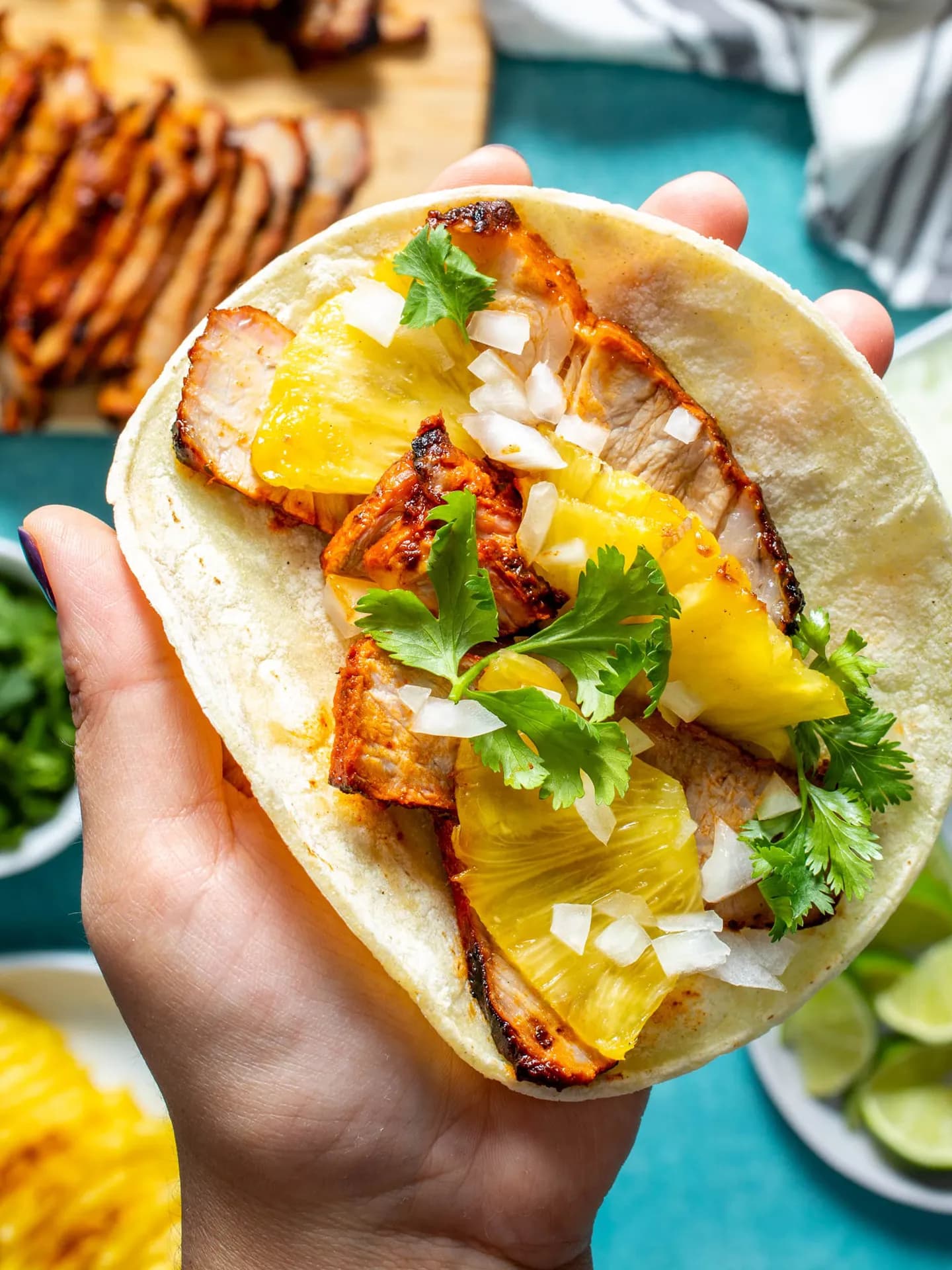
But it does not appear in every version, and the exact moment when it joined the preparation is not fully documented. Pineapple brings sweetness and acidity against the richness of the pork and the earthy spice of the adobo. As it browns, its sugars deepen into flavors that pair naturally with charred meat. It is also part of the visible ritual of the taquería: the taquero cuts a small piece and sends it flying toward the tortilla.
Still, many traditional taquerías do without it. Some serve it generously; others add only a small piece; others omit it entirely. Even among experienced tromperos, pineapple is better understood as a decision of the house than an absolute rule.
Pineapple reveals something important about al pastor: the dish has a clear identity without depending on a rigid formula. Its character comes from the whole, not from one mandatory ingredient.
What Sets a Good Taco al Pastor Apart?
Color alone proves nothing. A vivid red trompo may suggest achiote or chile, but it says very little about the seasoning, the texture, or the time the meat spent in the marinade.
A good taco begins with juicy meat and properly browned edges. The slices should be thin, but not so thin that they become dry scraps. The adobo should make itself known without covering the flavor of the pork.
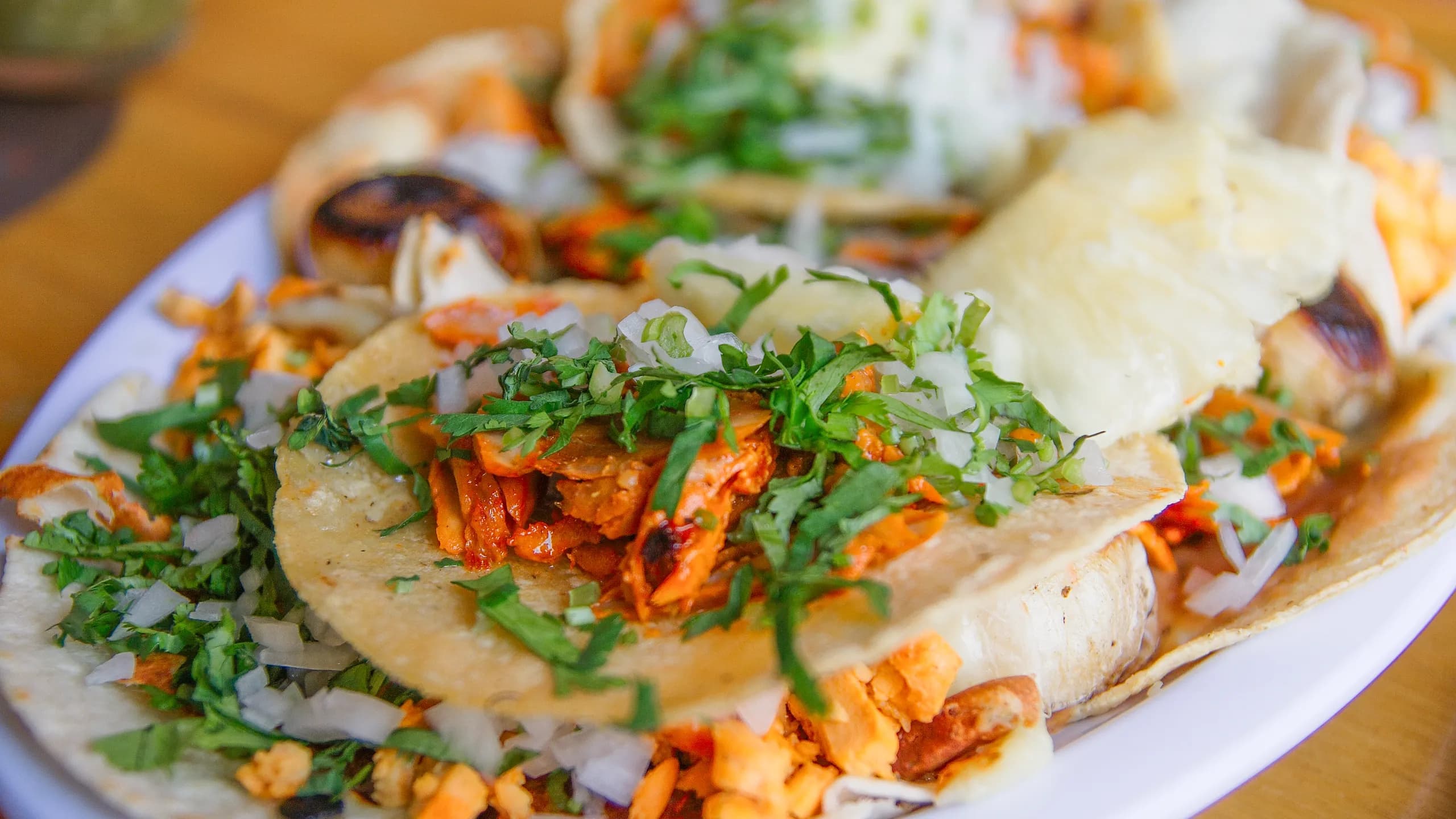
The tortilla should arrive warm, soft, and flexible. Some taquerías use two for added strength, although one well-made tortilla is enough when the portion is balanced. Onion and cilantro bring freshness; a squeeze of lime wakes everything just before the first bite.
And then there is the salsa. Salsa is not there to rescue an underseasoned taco; it is there to complete it. A raw green salsa can bring a bright, immediate heat. A red chile de árbol salsa leaves a clean, persistent intensity. A smoky morita or chipotle salsa deepens the roasted character of the meat.
Some taquerías also prepare something closer to a relish than a traditional salsa: thin slices of red or white onion mixed with fresh habanero, oregano, and lime juice, then left to soften and cure in the acidity. Crisp, fragrant, and considerably more intense, it cuts directly through the richness of the pork. It may not appear on the table automatically; in some places, you have to ask for it—and with good reason. It is not for every palate.
The best combination is rarely the most complicated. It is the one in which the tortilla, pork, char from the trompo, acidity, chile, and garnish remain distinct, yet arrive together in the same bite.
The Gringa: The Trompo’s Other Great Indulgence
The gringa is one of the most beloved ways to enjoy al pastor: meat sliced fresh from the trompo, melted cheese, and a tortilla toasted on the griddle—usually flour, although some taquerías also prepare it with corn. Its origin is surrounded by stories passed from one table to another. One of the most widely repeated accounts tells of two young American students—known locally as las gringas—who began ordering al pastor with cheese inside a wheat tortilla. The details shift depending on who tells the story, and no single version has been fully documented. Even so, the name endured, and the dish eventually claimed a place of its own within Mexico City’s taquería culture.
Where the taco al pastor is small, direct, and often eaten almost in passing, the gringa is more generous. The tortilla browns on the griddle, the cheese captures the meat’s juices and rendered fat, and the pastor becomes a richer indulgence—crisp at the edges and molten at the center.
The trompo also feeds alambres, tortas, volcanes, huaraches, and quesadillas. These forms reveal the preparation’s flexibility, but the small corn tortilla remains its clearest expression. There is little room to hide: what matters is the quality of the meat and the craft of the trompero.
From Central Mexico to the Pacific Coast
In Puerto Vallarta and Riviera Nayarit, the night has a taco identity of its own. Birria connects the region to the culinary traditions of Jalisco, while fish, shrimp, and smoked marlin tacos speak directly of the Pacific. Al pastor belongs to another lineage, but it has become a constant presence after dark across Banderas Bay.
No regional list can settle, objectively, which one is best. Everything depends on the intensity of the adobo, the browning of the meat, the size of the tortilla, the salsa, and even the hour of the visit. It is more useful to notice which places return again and again in diner reviews and local conversations.
In Puerto Vallarta, Pancho’s Takos and Pepe’s Tacos remain among the names most often mentioned for pastor, particularly by visitors staying near the central districts. Their popularity also brings lines and strongly divided opinions. For a more neighborhood-driven route, El Carboncito in Cinco de Diciembre and Taquerías Huicho’s are frequently recognized for their trompo and seasoning. Local conversations also point toward smaller stands, including those around Farmacia Guadalajara in the Zona Romántica, where many diners prefer the easy rhythm of the sidewalk to the city’s better-known taquerías.
Across Riviera Nayarit, Tacos Junior frequently shows up in recommendations for Bucerías and La Cruz de Huanacaxtle, especially for its tacos al pastor and no-nonsense gringas. El Fogoncito, in Bucerías, has gathered a loyal following around classic, neighborhood-style pastor, while Tacos Tal Ivan remains one of Sayulita’s most talked-about late-night stands for pork straight off the trompo with pineapple.
These mentions are not a definitive ranking or an absolute endorsement. Taquerías change, every night can be different, and many small stands operate without fixed hours or a stable digital presence. The most reliable signal is often the most Mexican one: look at the trompo, watch the movement of the stand, order two tacos first, and let your palate decide the next round.
When a Migrant Technique Began to Taste Like Mexico
To say that tacos al pastor were born through cultural exchange does not make them any less Mexican. Mexican cuisine has never developed in isolation. Part of its strength lies in receiving ingredients and techniques, passing them through the territory, local taste, and the knowledge of the people who cook, and reorganizing them until they acquire an identity of their own.
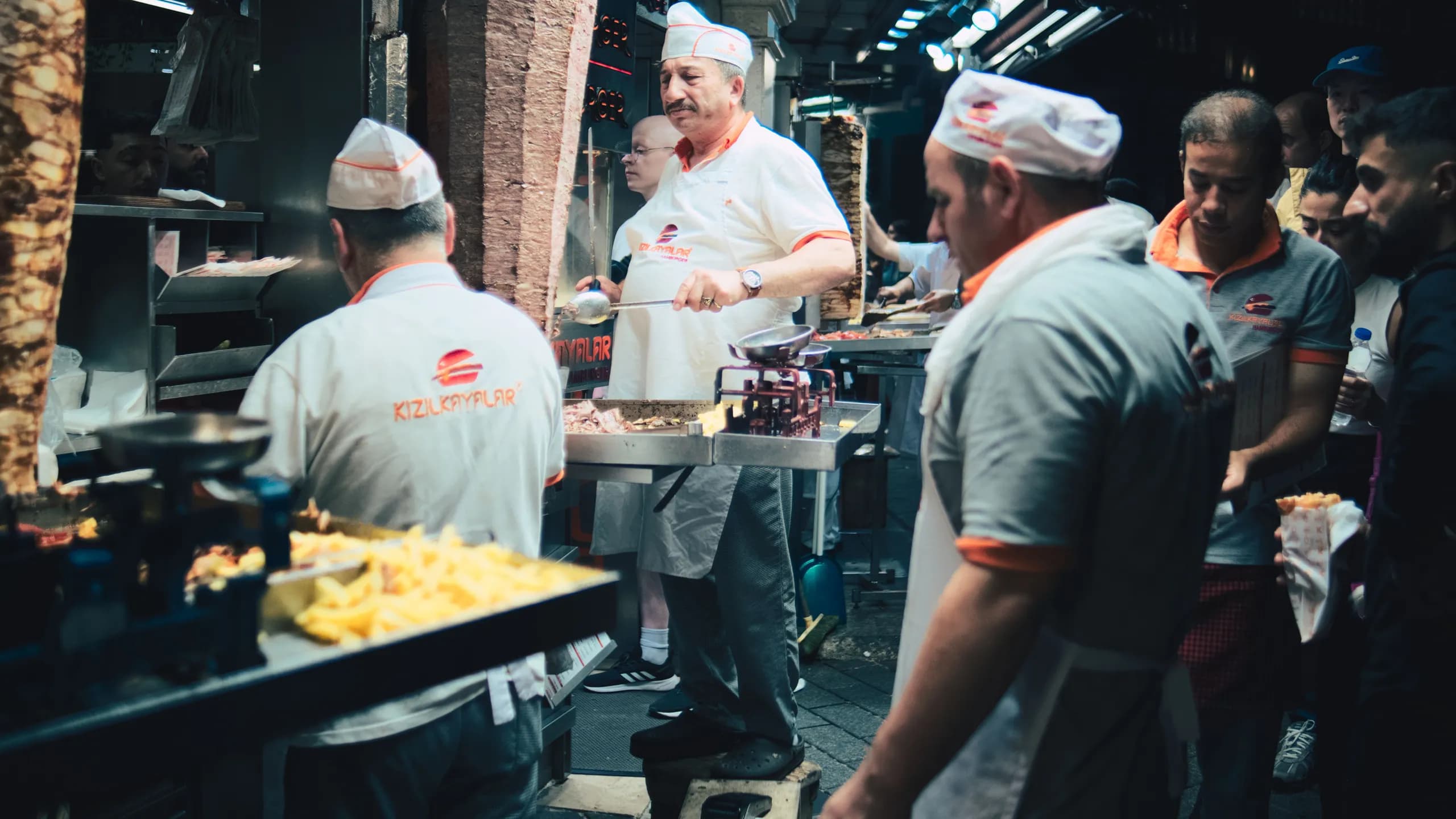
The vertical spit arrived from the Middle East. Puebla reinterpreted it through pork, local salsas, and the taco árabe. Mexico City transformed it again through corn tortillas, chile adobo, the specialized craft of the trompero, and the demands of a vast nighttime culture of streets and taquerías.
Originality, in this case, does not lie in the absence of foreign influence, but in what Mexico did with it. The received technique changed so profoundly, and was practiced so widely, that it eventually acquired another meaning.
Shawarma and al pastor still share a recognizable silhouette. Both turn before a flame. Both depend on layered meat and precise slicing. But they belong to different culinary systems.
One is served within the breads, condiments, and traditions of the eastern Mediterranean. The other falls onto a corn tortilla, takes on the color and character of Mexican chiles, wakes with lime, meets salsa, and is eaten within the particular ritual of the taquería.
That is what makes tacos al pastor a profoundly Mexican creation. They do not hide their migrant ancestry. They carry it in full view, turning before the fire: an edible memory of how migration becomes neighborhood, how adaptation becomes tradition, and how a recipe that arrived from far away can, with time, come to taste like home.
Filed under