
Choosing Puerto Vallarta and Riviera Nayarit: Why People Decide on a Place Before They Choose a Property
Before comparing options, many people need to resolve something more important: whether Puerto Vallarta or Riviera Nayarit truly fits the life they want to live.
By LUUMHAUS
| Last Reviewed:
For most people who now imagine building a life in Puerto Vallarta or Riviera Nayarit, the decision does not begin with a property tour. It begins much earlier.
It begins somewhere else.
It begins during a winter that feels longer than usual. During a daily commute that no longer feels reasonable. During a quiet evening at home, when the life someone has built begins to feel efficient, successful, and, at the same time, strangely disconnected from the life they actually want to live.
Sometimes the idea appears as a practical question: could we work remotely from somewhere warmer, more open, more connected to the outdoors? Sometimes it comes as a retirement calculation: would our money, our time, and our health stretch further somewhere else? Sometimes it is less defined than that: a feeling rather than a plan. The intuition that the next chapter should not simply be a continuation of the last one.
Only after that does the search become real.
Browser tabs open. Areas are compared. Options are saved. Ocean views, bedrooms, square meters, HOA fees, walkability, parking, rental potential, distance to the airport. What appears to be a property search is often the final expression of something more intimate and more important: the decision to change the context of one’s life.
That is why the first question is almost never: “Which property should I buy?”
The more honest question is usually: “Where would this next stage of life make the most sense?”
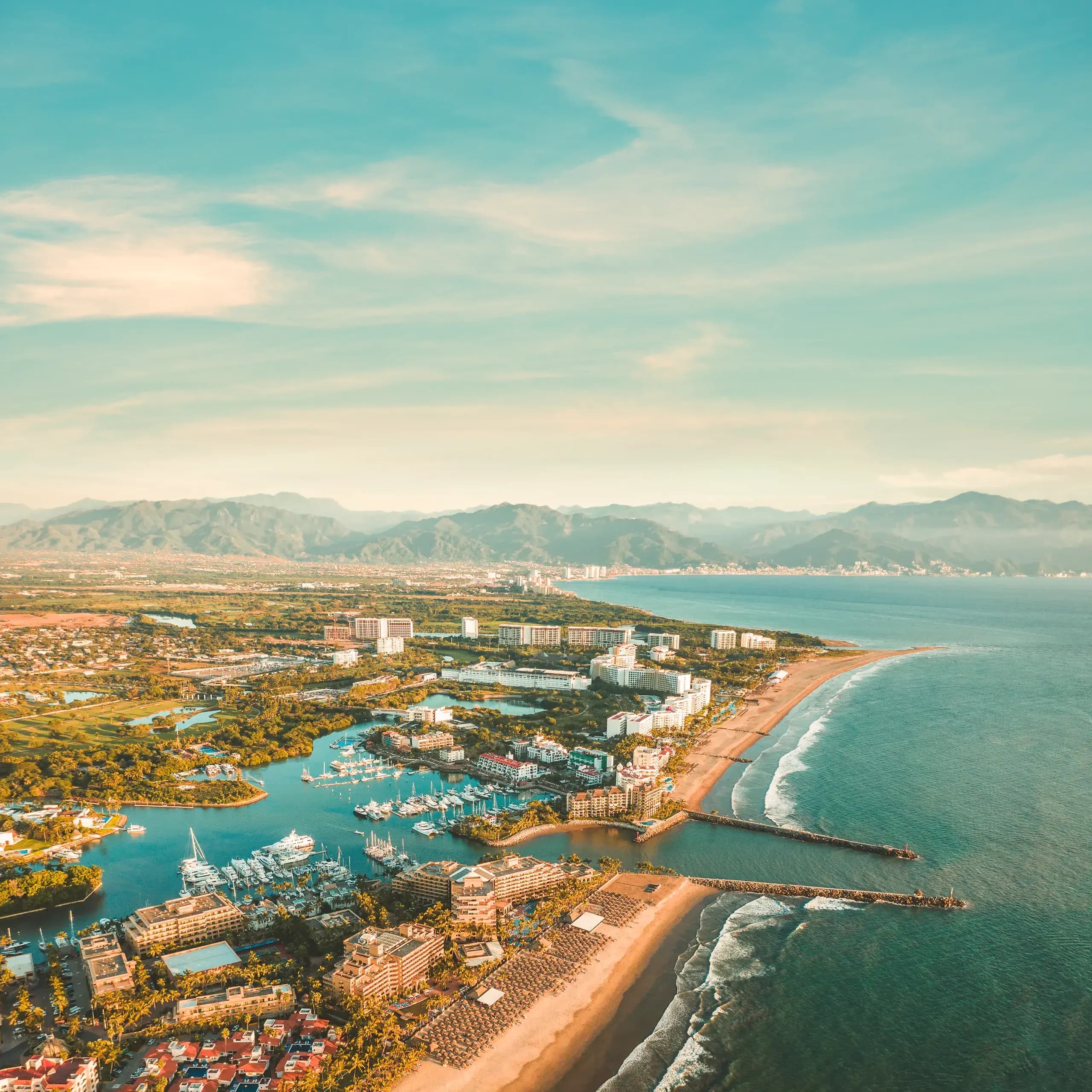
This region has a particular way of bringing that question into focus. Whether in Puerto Vallarta or Riviera Nayarit, this is not only a coastal destination. It is a place where geography, climate, community, routine, and personal reinvention meet in a direct way. The mountains are part of daily life. The ocean is not an abstraction; it is experienced every day. The region is large enough to offer infrastructure, culture, restaurants, healthcare services, and international connectivity, yet still intimate enough for daily rhythms to feel human in scale.
For some, that combination becomes a vacation memory. For others, it becomes a serious possibility.
At some point, the visitor stops asking whether they enjoyed being here and begins asking whether they could live here.
That is where the decision truly begins.
The Property Is Not the Starting Point
Real estate culture often treats the property as the center of the decision. This is understandable. Properties can be measured. They have prices, dimensions, locations, amenities, views, finishes, and legal structures. They can be photographed, compared, appraised, and negotiated.
Life is harder to measure.
A life has rhythm. It has routines. It has relationships, weather, errands, frustrations, friendships, habits, access, interruptions, and small pleasures. It has things that do not fit easily into a technical sheet.

That is why, before a property makes sense, many people begin imagining how their own days would feel in that place. For someone who walks or runs, the question is not only whether the location is good, but how mornings would feel in that climate, on those streets, with that humidity, with that light. For someone who enjoys beginning the day calmly, it matters whether there would be a terrace, a nearby café, or a quiet corner for an unhurried coffee. For someone who works from home, value is not only found in square meters, but in the quality of silence, connectivity, natural light, and the possibility of separating work from rest. For someone thinking about retirement, the decision also involves ease of movement, access to services, maintaining independence, and feeling accompanied without losing privacy.
These are not secondary considerations. They are often what determines whether a move actually works.
A property can be beautiful and still fail to correspond with the life someone wants. A home can have the right finishes and the wrong context. A view can impress guests and still do little to resolve the daily realities of distance, noise, access, community, or routine.
This is especially true in a region like Puerto Vallarta and Riviera Nayarit, where different areas offer very different versions of coastal life. The experience of living in a hillside home above the bay is not the same as living in a walkable urban neighborhood. Marina Vallarta, Versalles, Conchas Chinas, Nuevo Nayarit, Bucerías, La Cruz, Punta de Mita, and the smaller towns extending along this coast each have their own rhythm, advantages, limits, and social patterns.
The mistake is assuming that the decision begins with the house.
More often, it begins with the place.
And before the place, it begins with the person.
What People Are Really Searching For
When people say they are looking for a property in Puerto Vallarta or Riviera Nayarit, they are often looking for several things — and very different things — at the same time.
Perhaps they are looking for time.
Time is one of the least discussed motives behind a move. Many people arrive after years of living inside systems that consume time aggressively: long commutes, crowded calendars, professional demands, winter logistics, suburban maintenance, and the quiet fatigue of always being scheduled. The appeal of Puerto Vallarta and Riviera Nayarit is not only that life may cost less or look better. It is that here, life can feel organized differently.
A morning walk for coffee instead of driving through traffic. A meal with a view of the mountains, the marina, or the sea instead of eating between meetings. A day shaped by weather, proximity, and movement, not only by obligation.
Perhaps they are looking for climate.
Climate is often treated as a lifestyle preference, but it can become a structural force in daily wellbeing. Light changes behavior. Warmth changes social patterns. Outdoor living transforms the way people experience time, movement, and community. For those coming from colder northern cities, the Pacific Coast can feel less like an escape from winter and more like a return to physical ease.
Perhaps they are looking for community.
Modern life can be efficient and lonely at the same time. Many people in the process of moving are not simply looking for privacy; they are looking for connection. They want to be recognized somewhere. They want a neighborhood where repeated presence creates familiarity. A café where the staff remembers them. A market vendor who recognizes their routine. A walking route where the same faces appear over time.
Perhaps they are looking for reinvention.
A move often gives people permission to reconsider themselves. Someone who has spent decades defined by work may begin to imagine a life defined by health, art, food, learning, language, volunteering, family, or leisure. A couple may begin to imagine a relationship with more shared time. A family may imagine children growing up with more outdoor life and less pressure. A retired person may imagine aging with more movement, sunlight, and social participation.
Perhaps they are looking for belonging.
Belonging is more complex than arrival. It cannot be bought. It is built slowly through attention, humility, participation, and time. But the desire to belong is often present from the beginning. People do not only want to own something here. They want to feel that their presence makes sense here.
This distinction matters.
Property is legal. Belonging is relational.
The first can happen at a signing. The second requires a life.
Puerto Vallarta and Riviera Nayarit as a Life Context
Puerto Vallarta and Riviera Nayarit occupy a particular place in the imagination of many buyers, both international and national. This region is familiar enough to feel accessible and welcoming, yet complex enough to resist a simple definition.
It is a beach destination, but not only a beach destination. It is a city with tourism, but not only a tourism economy. It is a place of remarkable natural presence, but also a functioning community, with schools, hospitals, traffic, construction, local politics, seasonal rhythms, service workers, entrepreneurs, artists, families, retirees, and long-time residents whose lives are not organized around the visitor’s gaze.
To understand Puerto Vallarta and Riviera Nayarit as a future resident, one has to move beyond the vacation surface.
The calm of the sea is real. The bay is real. The sunsets are real. The pleasure of sitting near the water at the end of the day is real. But living in a region like this requires a more complete form of attention.
Where will you do your everyday shopping, and how much traffic will you have to navigate to get there?
How often will you depend entirely on a car or ride-hailing platforms?
How does the infrastructure on your street respond during the rainy season?
How steep or manageable is the walk back home?
How many minutes are you from the hospital and the medical connectivity you need?
Where will your social circle gather naturally, without requiring everyone to cross the bay?
How does the neighborhood feel at 7 a.m., not only at sunset?
Which streets invite walking, and which ones isolate you quietly?
What feels charming during a one-week visit, but could become inconvenient over the course of a full year?
These questions do not diminish the appeal of the place. They make it more durable.
A serious move requires the ability to hold beauty and practicality at the same time. This region rewards those who are able to do that. It is a place where quality of life can be deeply attractive, not because it eliminates complexity, but because it offers a different balance between complexity and reward.
This region does not answer every question for every person. No place does. But it does invite a different set of priorities.
For many, that invitation has considerable force.
The Shift From Visitor to Resident
There is a moment when a person stops evaluating the environment — whether Puerto Vallarta or Riviera Nayarit — as a simple destination and begins evaluating it as a life.
That shift changes everything.
The visitor asks: where should we stay?
The future resident asks: where would our routines make sense?
The visitor asks: which area is the most beautiful?
The future resident asks: which area would still make sense in August, with traffic, with everyday errands, when the novelty is no longer new?
The visitor seeks experience. The resident needs continuity.
This is one of the most important distinctions in relocation. A place can be excellent for vacation and wrong for residency. The opposite can also be true. Some of the most livable neighborhoods are not always the most obvious to visitors. They may not create the most dramatic first impression, but they can offer the daily structure that supports a satisfying life: access to supermarkets, cafés, medical services, walkability, shade, parking, schools, restaurants, gyms, language classes, community events, or simply a street life that feels natural.
The vacation version of the region usually revolves around rest. The residential version revolves around rhythm.
That rhythm can be urban and social. It can be quiet and residential. It can be oriented toward family, retirement, creativity, sport, gastronomy, or a deeply private life. The point is not that one version is better than another. The point is that every version involves tradeoffs.
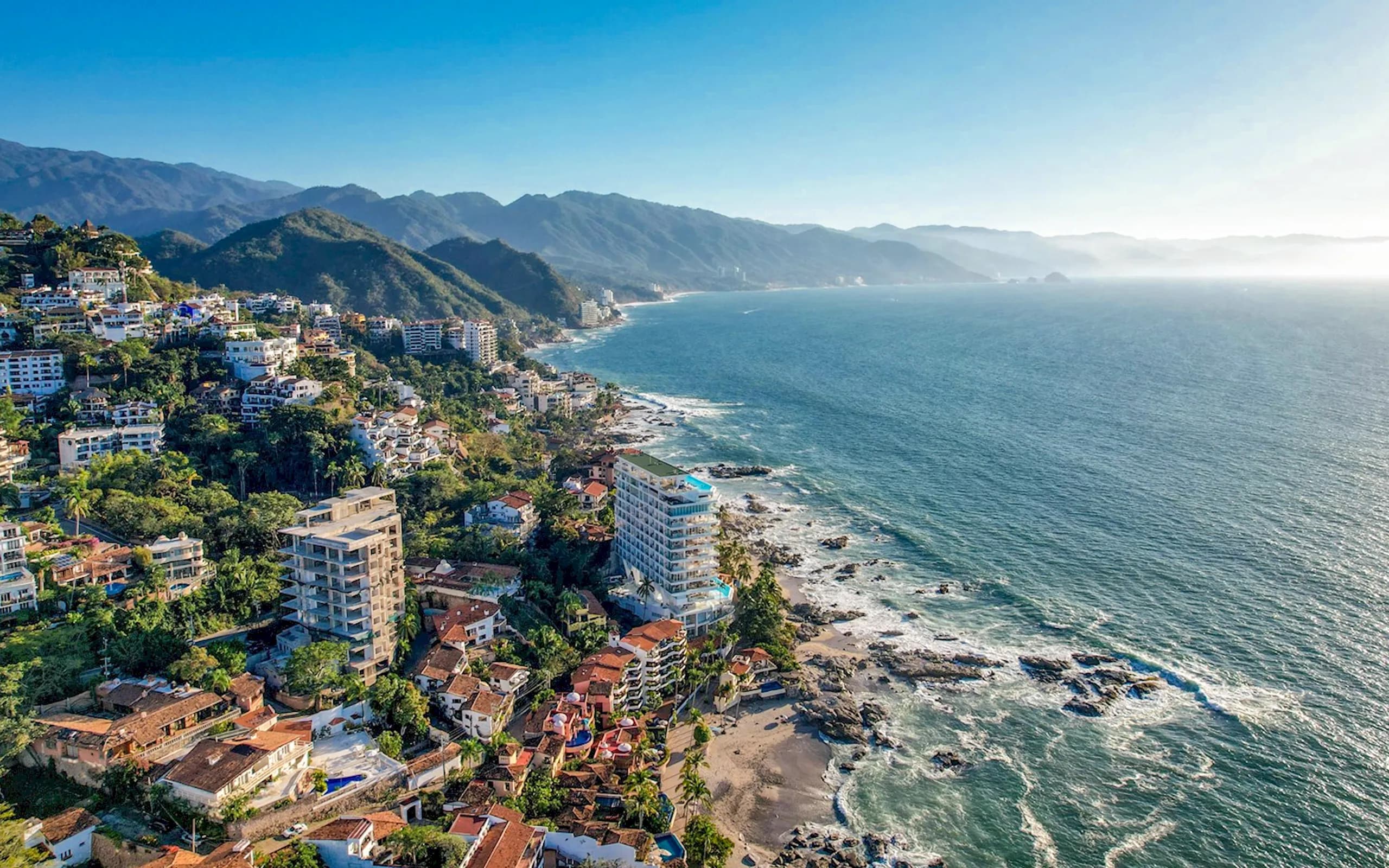
A home at the top of Conchas Chinas may offer fresh air, privacy, and extraordinary panoramic views, but require more driving. A central neighborhood like Versalles may offer walkability and cultural proximity, but also more noise and density. A planned community in Nuevo Nayarit may offer order, amenities, and security, but feel less connected to the traditional urban fabric. A coastal town like Bucerías or San Pancho may offer charm and community, but fewer services and less immediate access to healthcare infrastructure or international transportation.
The right choice depends less on what looks impressive and more on what supports the life being imagined.
That is why renting before buying can be useful for some people. Not because buying is inherently premature, but because lived experience reveals details that research cannot show. A month in a neighborhood can teach what a listing cannot fully say: the sound of the street, the morning light, the slope of the walk, the pattern of traffic, the feeling of returning home at night, the ease or friction of ordinary tasks.
Relocation decisions improve when imagination is tested against routine.
The Four Questions Behind the Move
Behind most successful moves are four questions. They are simple, but they deserve careful attention.
Can I See Myself Here?
This is the first layer. It is emotional, intuitive, and often immediate.
A person arrives and begins to imagine. They picture mornings, meals, workdays, visits from friends, family vacations, long walks, or quieter evenings. They observe whether the place opens something in them or simply entertains them.
This question matters because no relocation is purely rational. People need to feel some form of recognition. Not necessarily fantasy. Recognition. The sense that the place corresponds with something they value or with something they are ready to become.
But intuition should not be confused with a complete decision. Seeing yourself somewhere is only the beginning.
Can I Build a Life Here?
This is the operational question.
A life requires infrastructure. Internet. Healthcare. Banking. Legal guidance. Transportation. Supermarkets. Schools, perhaps. Community. Language learning. Maintenance. Reliable service providers. A realistic budget. A clear understanding of what is simple, what is different, and what may require patience.
This is where many relocation dreams either mature or weaken.
The question is not whether this region can support a high quality of life. For many people, it can. The question is whether it can support your version of life with enough stability, comfort, and resilience.
A remote executive has different needs than a retired person. A young family has different needs than a semi-retired couple. Someone who wants nightlife and restaurants has different needs than someone seeking silence, privacy, and nature. The same city can serve each of these people differently, depending on where and how they choose to live.
Can I Belong Here?
This is the social and cultural question.
Belonging is not guaranteed by geography. It requires participation. It may require language. It certainly requires respect for the fact that Puerto Vallarta and Riviera Nayarit are not a blank canvas onto which someone can project an idealized life, but a living region, with its own history, pressures, residents, customs, and evolving identity.
For newcomers, belonging often begins with humility. Learning the local rhythm. Understanding neighborhood norms. Supporting local businesses. Building relationships beyond the immediate expatriate circle. Recognizing that integration is not the same as consumption.
A person can live in this region and remain emotionally elsewhere. They can own a property, visit familiar restaurants, socialize only with people similar to them, and still never quite arrive.
But for those who engage with curiosity and consistency, the region can offer a deep sense of connection. Not immediately. Not automatically. But gradually, through the repeated acts that turn a location into a home.
Can I Stay Here?
This is the longevity question.
It is especially important for retirees, but not only for them. Staying requires more than affection. It requires sustainability.
Can the budget absorb changes over time?
Will the neighborhood still work if driving becomes less desirable?
Are healthcare services accessible enough for future needs?
Will family be able to visit easily?
Is the property manageable?
Does the community support independence, or does it quietly depend on conditions that may not last?
Many people make relocation decisions based on the person they are today. The best decisions also consider the person they may become in ten or twenty years. A steep entry, a remote location, or a car-dependent life may feel manageable now, but less so later. A community that feels peaceful today may feel isolating if social needs change. A property that feels generous today may become burdensome if maintenance becomes complicated.
The best decisions are not only aspirational. They are durable.
Tradeoffs Are Not Warnings. They Are Clarity.
Every meaningful place involves some form of compromise.
This is not a failure of Puerto Vallarta or Riviera Nayarit. It is the nature of choosing.
The same qualities that make a neighborhood attractive to one person can make it unsuitable for another. Walkability often brings density. Privacy often brings distance. Views often bring elevation. Newer infrastructure can mean less historic character. Older neighborhoods may offer charm and community, but also narrower streets, older buildings, or more irregular conditions.
A mature decision does not eliminate tradeoffs. It understands them.
This is where much real estate content fails the reader. It presents every area as desirable, every property as exceptional, every opportunity as urgent. But important life decisions do not become safer through enthusiasm. They become safer through context.
A person considering Puerto Vallarta or Riviera Nayarit does not need to be convinced that the region is beautiful. The beauty is evident. What they need is help understanding how that beauty works as a place to live.
Where does daily life become easier?
Where does it become more complex?
Which inconveniences are acceptable?
Which ones would become exhausting?
Which qualities are essential, and which are merely attractive?
These questions are not negative. They are respectful. They recognize that the reader is not buying an image, but making an important decision about time, money, identity, and future wellbeing.
Clarity is not the opposite of charm. It is what allows charm to survive contact with reality.
Why Real Estate Comes Later
By the time a buyer begins evaluating properties seriously, the most important decisions should already be taking shape.
The buyer should have a sense of the life they want. The rhythm. The level of social connection. The importance of being able to walk. The tolerance for noise. The need for proximity to healthcare services. The role of rental income, if any. The relationship between privacy and access. The difference between what feels exciting during a vacation and what proves sustainable in daily life.
Only then does the property search become intelligent.
Without that foundation, buyers can be seduced by features that do not answer the deeper question. A beautiful kitchen does not compensate for a neighborhood that feels isolating. A larger terrace does not solve the problem of being too far from daily needs. A lower price does not automatically create value if the location fails to support the desired lifestyle.
When place comes first, the property search narrows naturally.
The buyer begins to understand why one neighborhood feels aligned and another does not. Why one building works and another only photographs well. Why a smaller home in the right context may serve better than a larger one in the wrong location. Why value is not measured only in price per square meter, but in the daily usefulness of the life surrounding it.
This does not make the property irrelevant. It makes it meaningful.
A home is the physical anchor of the decision. It matters deeply. It shapes privacy, comfort, aesthetics, finances, and long-term security. But it is not the whole decision. It is the place where a larger decision lands.
The Future People Are Choosing
When people choose this region, they are often choosing more than a city. They are choosing a future version of themselves.
A version that spends more time outdoors.
A version that welcomes family differently.
A version that moves through the day with more ease.
A version that participates in a community, rather than simply living near one.
A version less defined by accumulation and more defined by experience, proximity, health, climate, and time.
This does not mean every move is dramatic. For some, the change is subtle: a winter residence, a part-time base, a slower season each year. For others, it is complete: selling a home elsewhere, moving permanently, learning the systems, building a new network, and allowing Mexico’s Pacific Coast to become the setting for the next major chapter.
In both cases, the underlying decision is similar.
People are not only asking: “Can I afford this property?”
They are asking: “Can I recognize my future here?”
That question deserves careful treatment. It deserves more than listing descriptions, promotional language, or simplified neighborhood rankings. It deserves observation, patience, and a willingness to examine both promise and friction.
Both Puerto Vallarta and Riviera Nayarit can offer an extraordinary quality of life for the right person, in the right context, and with the right expectations. But the soundness of the decision depends on alignment. Alignment between person and place. Between aspiration and routine. Between beauty and practicality. Between the life imagined and the life that can actually be lived.
The Decision Before the Decision
The decision to move rarely happens all at once.
It forms slowly.

It forms during repeat visits, walks through different areas, conversations with residents, sunsets, a table at a restaurant by the sea, or quiet moments when someone feels that one chapter of life has ended and another is beginning to take shape. It forms through questions that become more specific over time. First: could we live here? Then: where exactly? Then: what would daily life look like? And finally: in which home do we want to live that life?
By the time the right property appears, the deeper decision may already have been made.
That is why Puerto Vallarta and Riviera Nayarit should not be understood only as a real estate market. They should be understood as a place where people arrive to evaluate a different way of organizing life.
Some will decide it is not for them. That, too, is clarity. Others will discover that the region offers precisely the balance they had been looking for: natural beauty, cultural texture, international access, daily warmth, and the possibility of belonging to a place that feels both stimulating and stable.
The property will matter.
But the property will come after the more important recognition.
Homes are built with materials, budgets, design decisions, and legal agreements. Lives are built with habits, relationships, surroundings, and the daily evidence of having chosen well.
The decision to move begins when a person stops asking only what they want to own and begins asking how they want to live.
For many who eventually choose this region, that is the moment when the search truly begins.
Filed under