
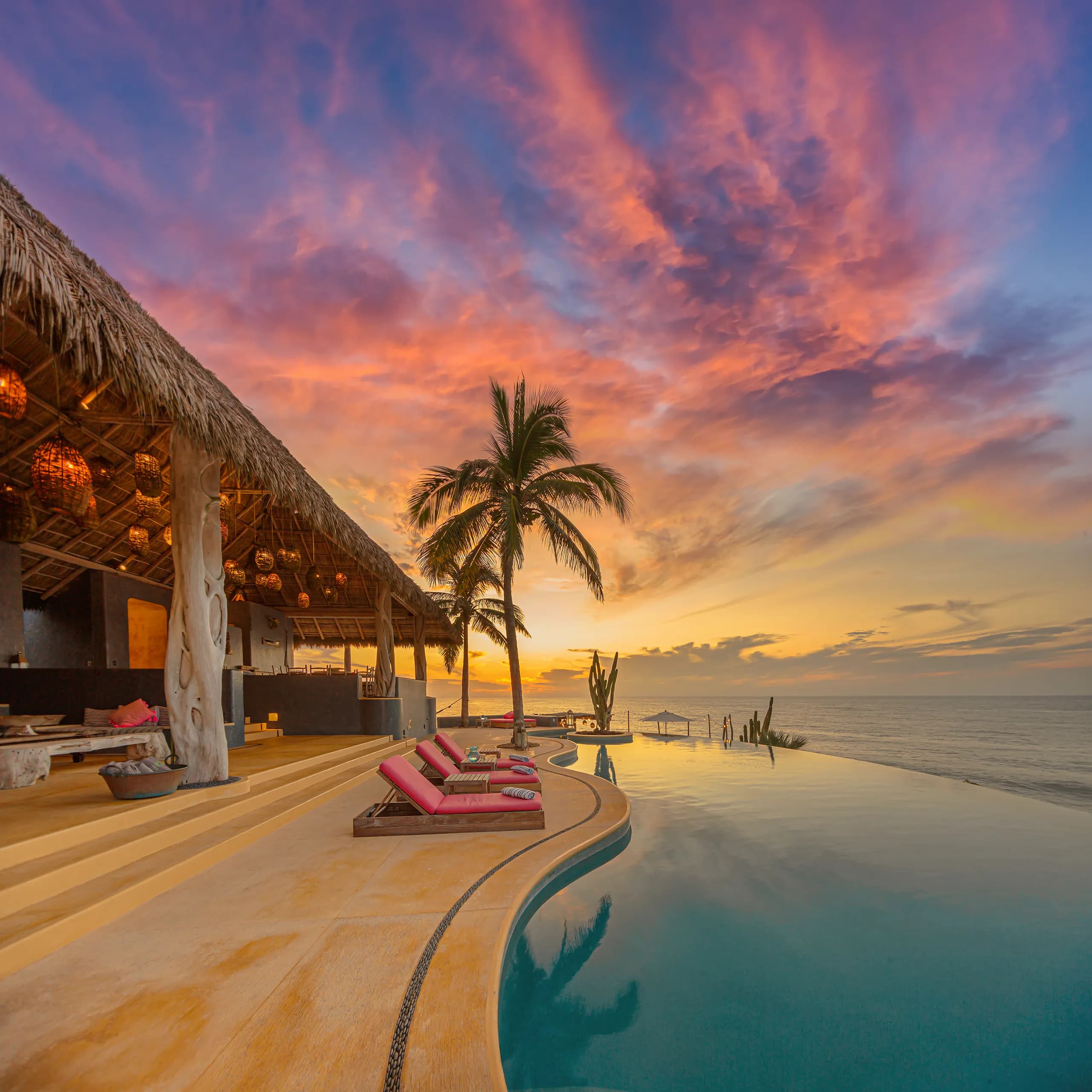
The Science of Coastal Luxury: Resilient Materials for Premium Beachfront Homes
For high-end beachfront residences, material selection is not a decorative exercise. It is a performance strategy.
By LUUMHAUS
| Last Reviewed:
There is a particular kind of beauty that only exists at the edge of the sea. Light moves differently. Materials read differently. Stone feels cooler, metal feels sharper, and textiles have to negotiate with a climate that is never fully still.
But beachfront luxury is also one of the most punishing design environments a home can face.
The issue is not simply moisture. It is salt air, ultraviolet exposure, sustained humidity, wet-dry cycling, and the quiet persistence of chlorides settling into every joint, reveal, fastener, grille, hinge, and threshold. A beachfront home may photograph beautifully on the day it is delivered. The more important question is whether it still looks composed after five summers.
For high-end beachfront residences, material selection is not a decorative exercise. It is a performance strategy. The most successful coastal interiors are not built around the soft visual language of “beach style.” They are built around exposure, chemistry, maintenance, and long-term dignity.
The best luxury coastal homes understand one principle clearly: the closer a material gets to salt, sun, and open air, the more disciplined the specification must become.
Exposure Zoning: The First Luxury Decision
Before choosing stone, metal, cabinetry, or upholstery, the project must establish exposure zones.
A fully conditioned interior room, far from operable glazing and protected from direct sun, can accept more delicate materials. A perimeter zone near sliding doors, ocean-facing terraces, pool transitions, and open-air corridors cannot be treated the same way. Those areas live in a different climate, even when they are technically inside the home.
This is where many expensive coastal interiors fail. They apply the same finish logic across the entire residence because the aesthetic wants continuity. But continuity without performance becomes fragility.
A better approach is to keep the visual language consistent while changing the material logic beneath it. The palette may remain calm, architectural, and refined. The specification, however, becomes progressively tougher as it approaches the sea.
In practice, that means marine-grade metals near openings, low-absorption surfaces at wet thresholds, dimensionally stable substrates in millwork, breathable wall assemblies on exterior-facing walls, and mechanical systems designed to control humidity rather than simply cool the air.
Luxury, in this context, is not excess. It is precision.
Metals: Where Coastal Failure Often Begins
Metal is one of the first places where salt air reveals weak decisions. A door pull, shower fitting, hinge, light fixture, or HVAC grille may seem minor compared with the architecture of the home. But in a beachfront environment, small metal failures become visually loud.
Tea staining, pitting, rust marks, bubbling finishes, and corroded fasteners immediately reduce the perceived quality of a residence. They also create a psychological problem: once a homeowner sees corrosion in one detail, they begin to question the entire build.
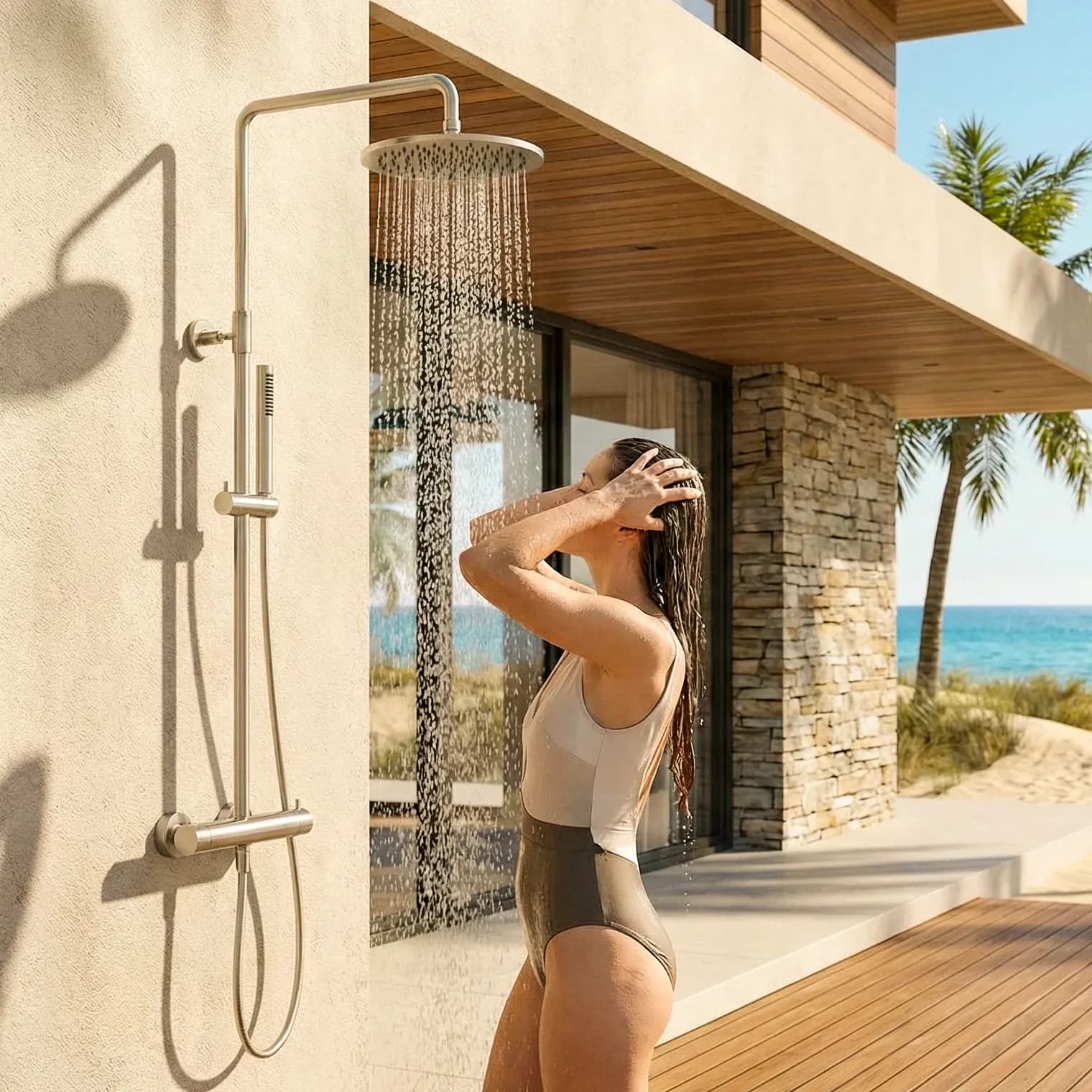
316L Stainless Steel
For high-end coastal interiors, 316L stainless steel should be considered the baseline for exposed hardware, plumbing trim, shower fittings, door pulls, lighting components, and visible fasteners.
Its advantage over more common stainless grades lies in its improved resistance to chloride-driven corrosion. Salt air is rich in chlorides, and chlorides are particularly aggressive toward metals. In 316L stainless, molybdenum improves resistance to pitting and crevice corrosion, while the low-carbon formulation helps reduce issues around welds.
Aesthetically, 316L is restrained and architectural. It works well in contemporary coastal interiors because it feels clean without feeling decorative. Brushed, satin, or bead-blasted finishes often perform better visually than mirror-polished surfaces because they conceal small marks and align with a quieter luxury language.
But 316L should not be treated as invincible. In direct surf exposure, splash zones, or poorly ventilated cavities where salt accumulates, even 316L can stain or pit. In the harshest conditions, higher-performance alloys or titanium may be more appropriate.
The main rule is simple: avoid 304 stainless, zinc-plated steel, low-cost “stainless look” hardware, and mixed-metal assemblies without proper isolation. In coastal homes, the screw behind the beautiful fitting matters as much as the fitting itself.
PVD-Coated Brass
Many luxury owners still want warmth. Stainless steel is durable, but it can feel cool. PVD-coated brass offers a more refined answer for kitchens, bathrooms, wardrobe hardware, and decorative metal details where champagne, bronze, or brushed-gold tones are desired.
PVD is not simply paint. It is a vapor-deposited finish bonded to the substrate, generally offering better abrasion resistance and finish durability than conventional decorative plating. When applied over a solid brass substrate, it gives designers a way to introduce warmth without relying on fragile lacquered brass or cheap plated alloys.
The key is to understand its role. PVD-coated brass is a premium decorative durability strategy. It is not the same thing as raw titanium or high-grade stainless in severe exposure. It belongs in protected or semi-protected interior zones, especially where touch, cleaning, and humidity are the main challenges rather than direct salt spray.
Avoid lacquered “living brass” in high-use coastal areas unless patina is an intentional part of the design brief. What reads as romantic aging in one project can read as neglected maintenance in another.
Bronze and Silicon Bronze
Bronze remains one of the most beautiful coastal metals because it ages with character. It does not pretend to stay static. It develops patina, depth, and a sense of permanence that aligns well with tropical modern, Mediterranean, and yacht-influenced interiors.
For statement pulls, custom lighting, door hardware, and exterior-adjacent details, bronze can feel more substantial than plated finishes. Silicon bronze, in particular, has a long association with marine hardware and performs well in salt-laden environments.
The tradeoff is aesthetic control. Bronze will change. For some projects, that is precisely the point. For others, especially those seeking a pristine, gallery-like finish, the maintenance expectations must be discussed early.
The mistake is trying to specify bronze for its romance while expecting it to behave like a sealed decorative coating. Bronze is most successful when its evolution is part of the material story.
Titanium
Titanium is not common in residential interiors, but in the most exposed beachfront homes it deserves consideration. It is expensive, difficult to fabricate well, and unnecessary for many applications. Yet for custom hardware, shower components, lighting elements, and marine-adjacent details where lifetime performance matters, it is one of the most technically credible materials available.
Its appeal is not decorative fashion. It belongs to a different category of luxury: engineering-grade restraint. Titanium makes sense when the project requires the kind of durability more often associated with marine, aerospace, or superyacht environments.
Used selectively, it can become one of the most intelligent specifications in the home. Used everywhere, it may become unnecessary theater.
Hard Surfaces: Low Absorption, High Stability, Verified Traction
The floor of a beachfront home carries a demanding set of expectations. It must survive sand, wet feet, sunscreen, humidity, cleaning, pets, guests, and heavy sun exposure. It must also feel calm, expensive, and coherent with the architecture.
That combination makes hard-surface selection one of the most important decisions in the project.
Large-Format Porcelain Slabs
Large-format porcelain is one of the most reliable luxury materials for coastal interiors. It can be used for flooring, shower walls, backsplashes, feature walls, fireplace surrounds, and in many cases counters. Its low absorption, UV stability, stain resistance, and dimensional consistency make it especially well suited to beachfront homes.
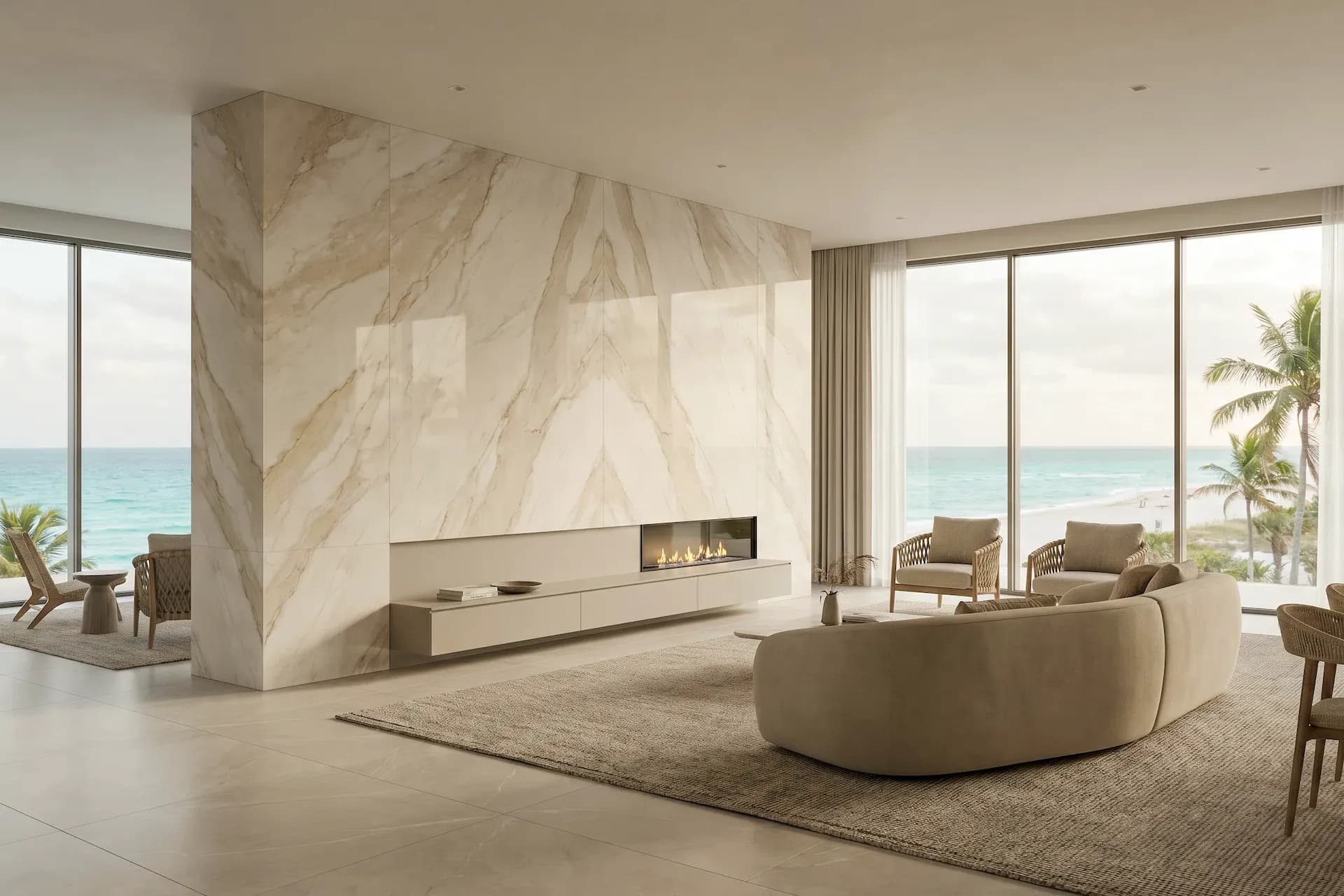
The best porcelain slabs now emulate limestone, travertine, quartzite, marble, and concrete with remarkable sophistication. More importantly, they allow for large, quiet surfaces with fewer grout joints. This matters in luxury interiors, where visual calm often comes from scale and restraint.
Porcelain is not a compromise when specified properly. It is often the more intelligent luxury choice.
The key is to avoid choosing by image alone. For floors, especially at wet indoor-outdoor transitions, traction data matters. A polished slab may look spectacular in a showroom and become a poor decision at the threshold between a pool terrace and an interior living room.
For beachfront homes, textured, honed, matte, or structured porcelain surfaces often provide the better balance of elegance and performance.
Genuine Quartzite
For owners who want natural stone, genuine quartzite is often the strongest candidate. It offers geologic depth, crystalline movement, and individuality that manufactured surfaces can only interpret. In the right application, it brings a level of natural prestige that remains difficult to replicate.
But the word “quartzite” must be treated carefully. Not every slab sold as quartzite performs like true quartzite. Some stones are mislabeled or behave more like marble, with greater vulnerability to etching, staining, or scratching.
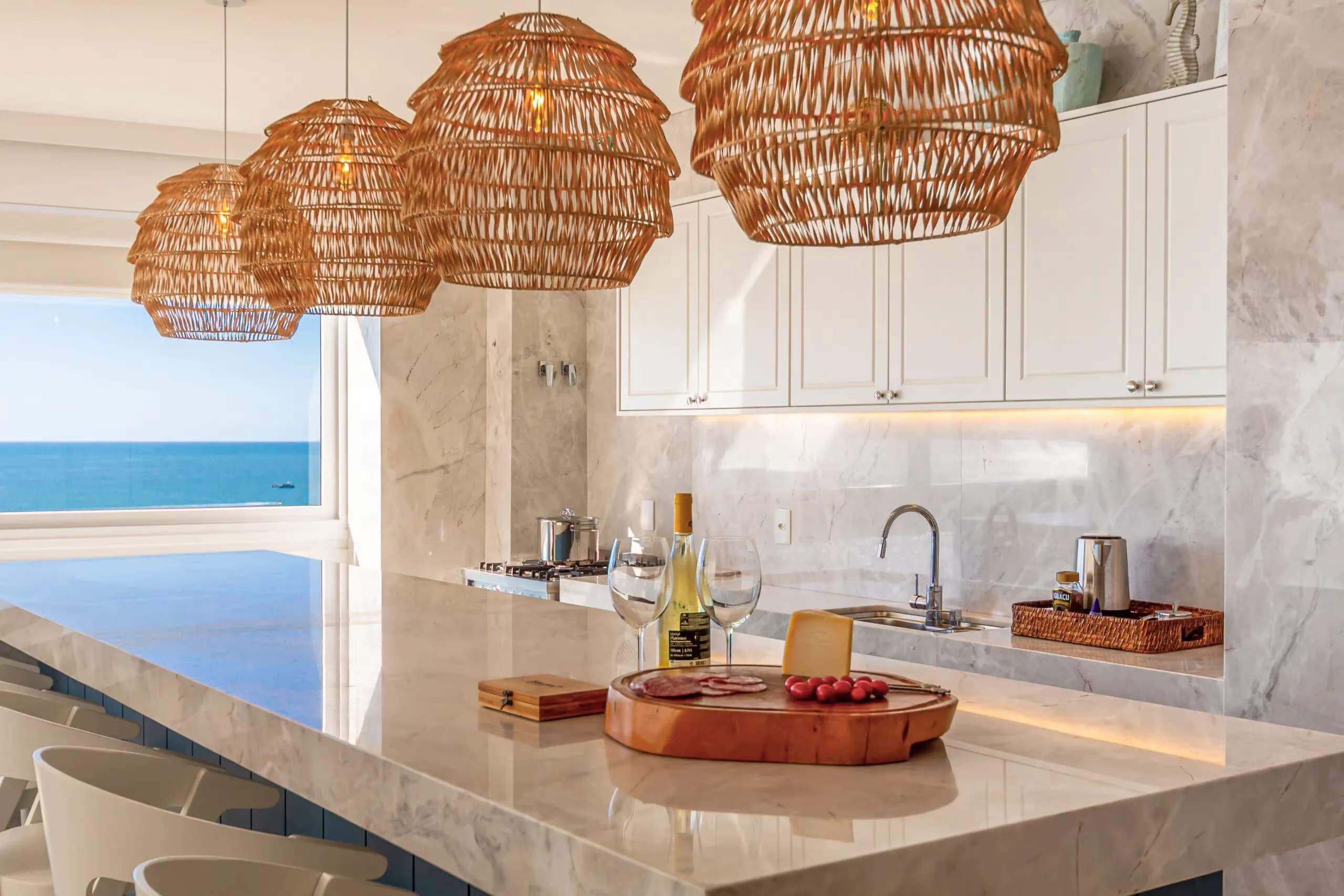
For luxury coastal homes, quartzite should be selected by tested slab data, not by name alone. Absorption, hardness, finish, sealing strategy, and installation context all matter. Leathered or honed finishes may be more forgiving than polished surfaces in bright, high-use environments.
Quartzite belongs where natural beauty is essential and where the owner accepts that natural stone requires informed care. It is a privilege material, not a maintenance-free material.
Travertine and Limestone
Travertine and limestone remain deeply attractive in coastal interiors. They bring warmth, softness, and a sun-washed architectural quality that suits many beachfront homes. Used well, they can feel timeless.
Used poorly, they age quickly.
These stones are generally more porous and more chemically sensitive than porcelain or genuine quartzite. They can stain, etch, absorb moisture, and show wear in ways that may be desirable in an old Mediterranean villa but less acceptable in a new high-end beachfront residence.
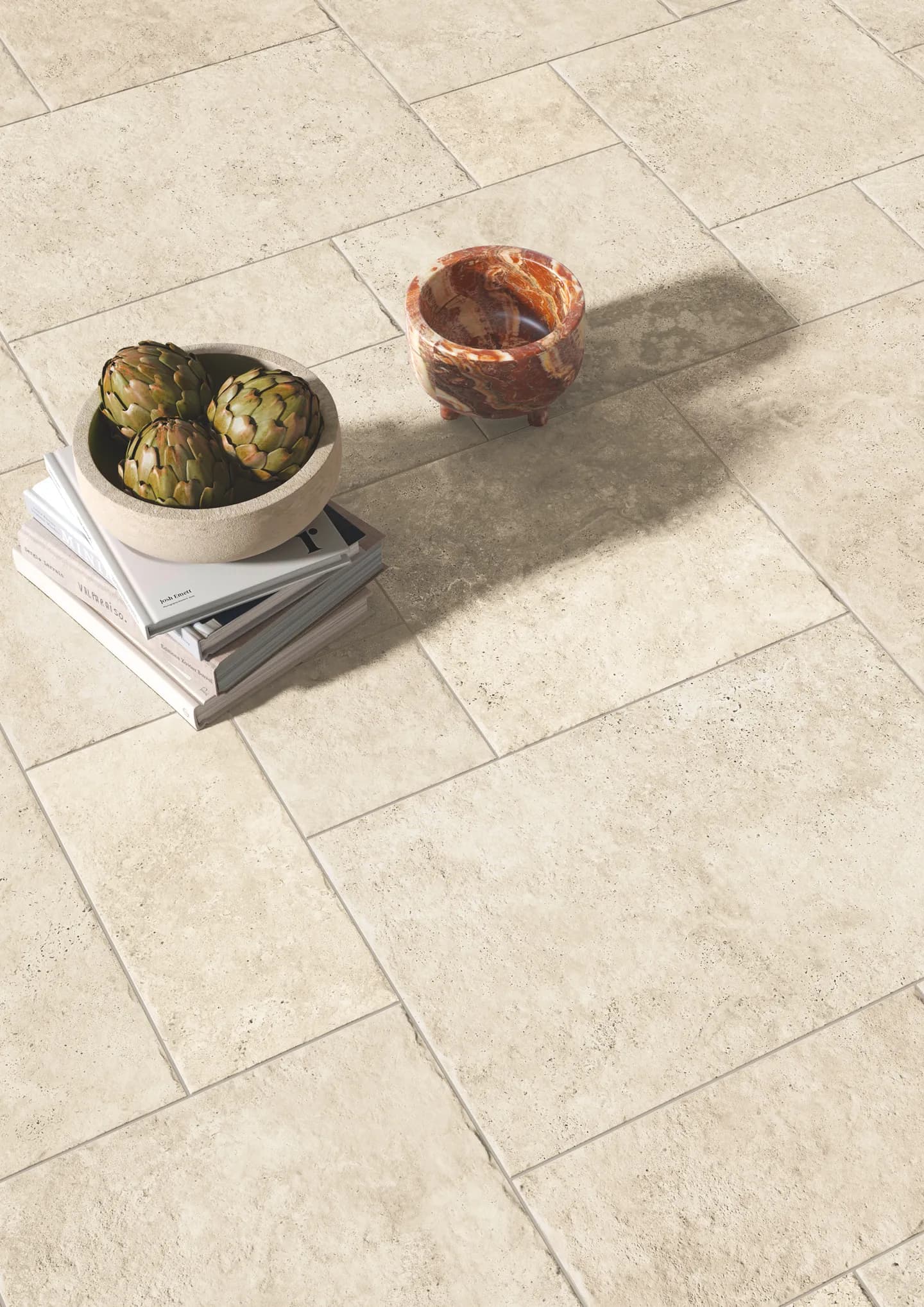
The best strategy is selective use. Honed or filled travertine can work beautifully on protected vertical surfaces, dry interior floors, sheltered bath walls, or spaces where its softness is part of the intended atmosphere. It is less appropriate for high-use kitchen counters, wet thresholds, pool-adjacent flooring, or any area regularly exposed to acid, salt, sunscreen, or standing moisture.
In coastal luxury, restraint often protects beauty.
Sealers and Thresholds: Invisible Details, Visible Consequences
A sealer should not make natural stone look coated. In high-end work, the goal is invisible protection: improved resistance to water, stains, and salt intrusion while allowing the material to breathe.
For porous stone, penetrating or impregnating sealers are generally preferable to topical film-forming coatings. Film-forming products can trap moisture, create a plastic appearance, or fail unevenly in humid environments.
Thresholds require particular attention. This is where wet feet, air conditioning, exterior heat, salt, and cleaning chemicals converge. It is also where many homes attempt the most seamless architectural gesture: interior floor meets exterior terrace with minimal interruption.
That gesture is beautiful, but it must be engineered. Surface texture, slope, drainage, stone selection, grout or joint strategy, and traction all matter. The more invisible the transition looks, the more technically resolved it needs to be.
Millwork and Cabinetry: The Hidden Structure of Luxury
Cabinetry failure is especially painful in a luxury home because it affects daily touch. Swollen panels, uneven reveals, peeling veneer, soft edges, and telegraphed joints make a residence feel tired quickly.
In coastal climates, the substrate behind the finish is often more important than the finish itself.
Marine-Grade Plywood
For cabinetry boxes, vanities, built-ins, and storage systems near humid areas, marine-grade plywood is one of the strongest conventional choices. It offers better moisture tolerance, stronger glue lines, and greater dimensional stability than commodity particleboard or standard MDF.
It also supports the precision expected in luxury cabinetry. Doors close with weight. Reveals stay cleaner. Interior detailing can be executed with confidence.
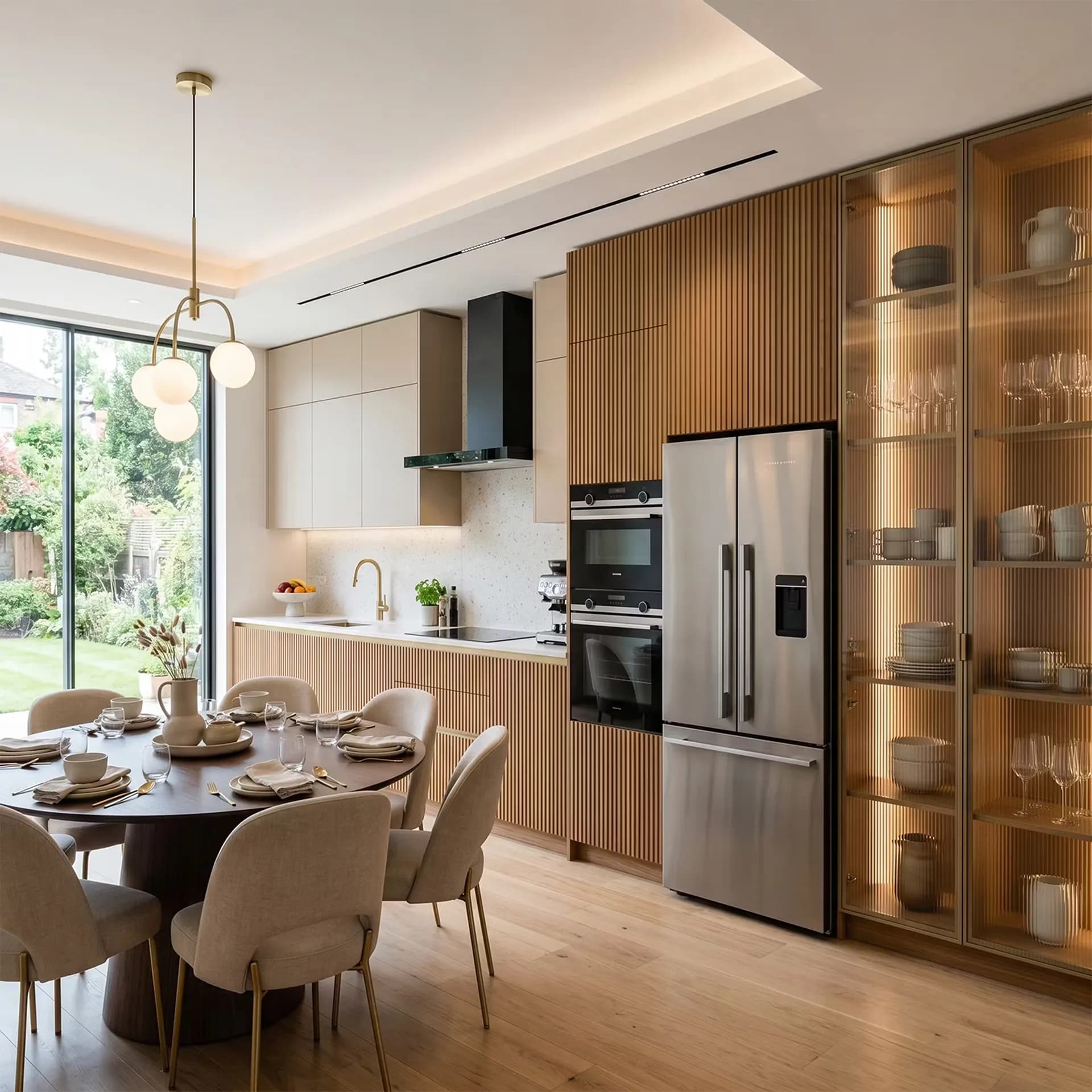
Marine plywood is not an excuse to ignore detailing. Edges must be sealed. Penetrations must be protected. Installation must anticipate condensation, leaks, and vapor movement. But as a base material, it gives the millwork a far better chance of aging well.
Avoid particleboard and standard MDF in humid perimeter zones, ocean-facing cabinetry, vanities, and window-adjacent built-ins. They may reduce cost on paper, but they often create the first visible signs of compromise.
Accoya and Tricoya
For painted joinery, shutters, vanity fronts, window seats, and detailed profiles, modified wood products such as Accoya and Tricoya are particularly compelling.
Their value lies in dimensional stability. Coastal humidity wants wood to move. Painted millwork wants crispness. Those two desires are often in conflict.
Accoya and Tricoya help resolve that tension. They are not inexpensive, but they protect one of the most important visual signals in a high-end interior: sharp, calm, consistent detailing.
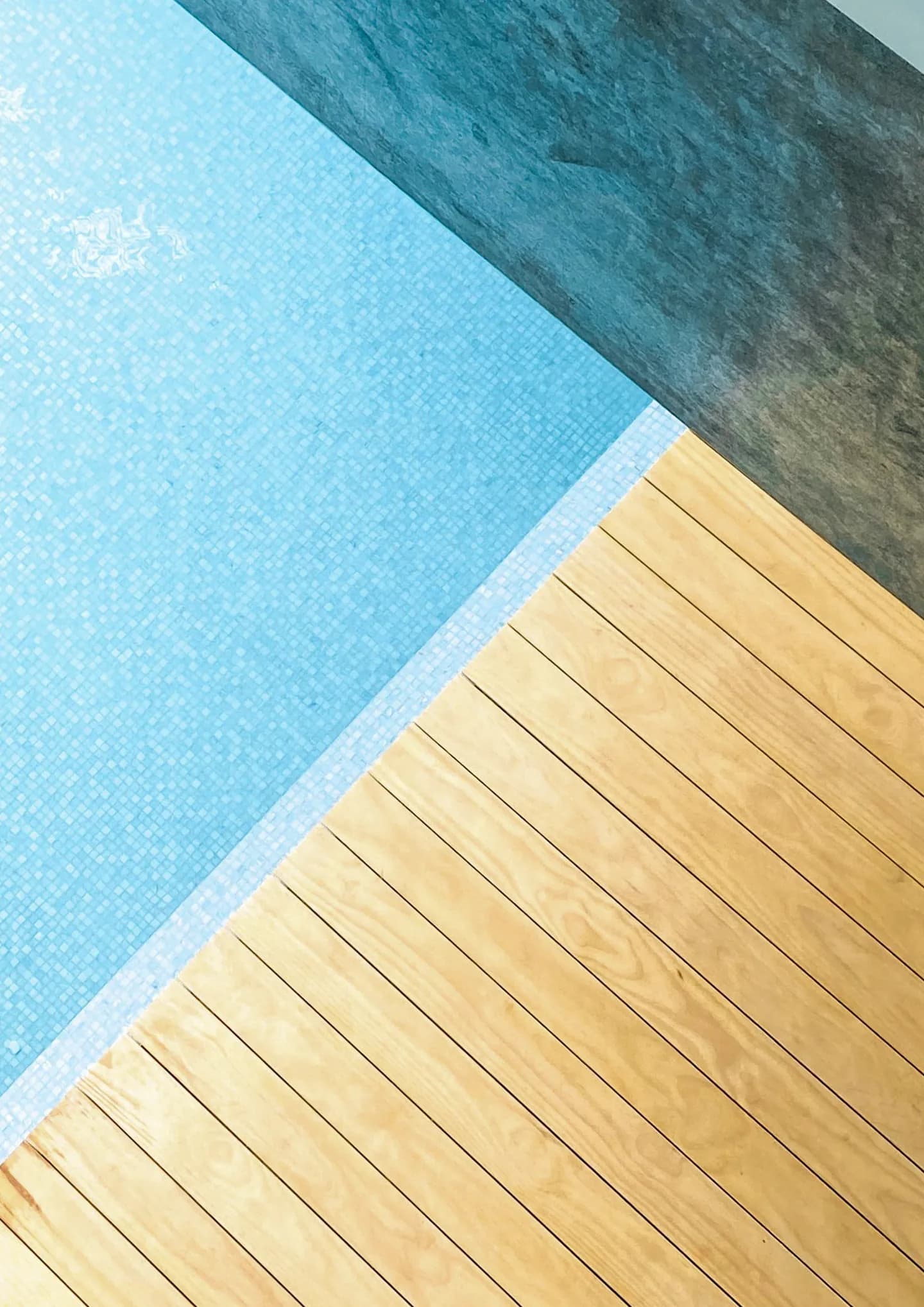
In a luxury beachfront home, a perfectly aligned painted panel may not attract attention. A swollen one always will.
Teak, Ipe, and Exposed Hardwoods
When wood is meant to be seen and touched, teak and ipe remain among the strongest options for exposed coastal conditions. Teak carries a long marine association and brings a classic warmth. Ipe offers density, durability, and visual weight. Modified woods can provide a more controlled, contemporary alternative.
The important point is that durable wood is not maintenance-free wood. Moisture content, acclimation, finishing system, end-grain sealing, ventilation, and cleaning cycles all influence performance.
A beachfront home should borrow from yacht discipline: prepare the substrate carefully, use compatible primers and sealers, protect against UV, and design details that do not trap salt or moisture. The finish is not a cosmetic layer. It is part of the system.
Textiles: Performance Without Visual Compromise
The old distinction between luxury fabric and performance fabric is increasingly obsolete. In coastal homes, performance is part of luxury.
Solution-Dyed Acrylics
For upholstery near sliders, sunrooms, terraces, pool-facing lounges, and breakfast areas exposed to strong light, solution-dyed acrylic textiles are among the most reliable options. Because pigment is integrated into the fiber rather than applied only to the surface, these fabrics resist fading far better than many conventional textiles.
The best collections now offer texture, softness, depth, and sophistication. They no longer read as outdoor fabric in the old sense. They can support tailored upholstery, relaxed seating, and elegant interior schemes while resisting UV, mildew, stains, and frequent cleaning.
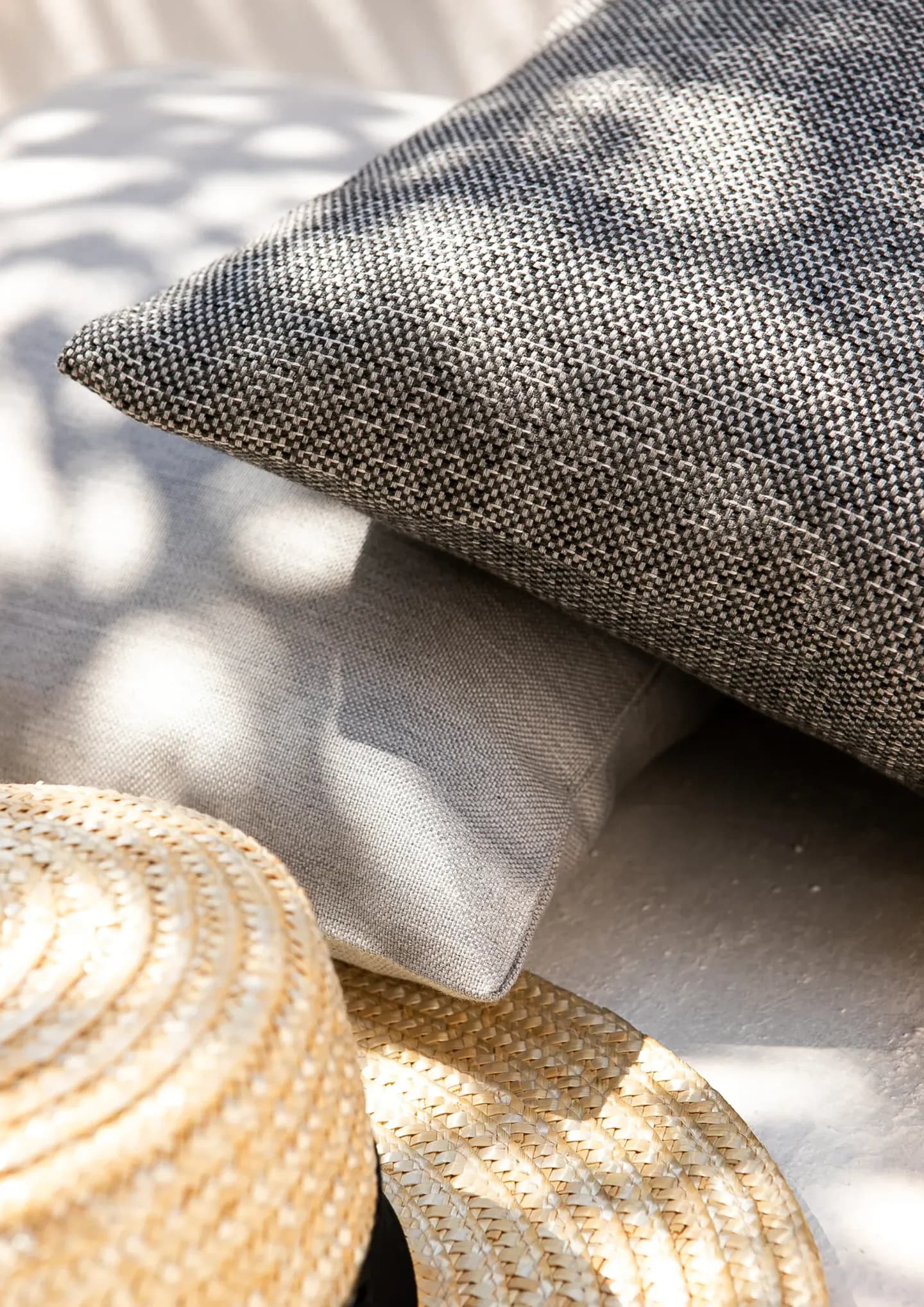
This is especially important in homes where people move constantly between pool, terrace, beach, and interior rooms. Sunscreen, salt, damp clothing, and humidity are not occasional events. They are part of the lifestyle.
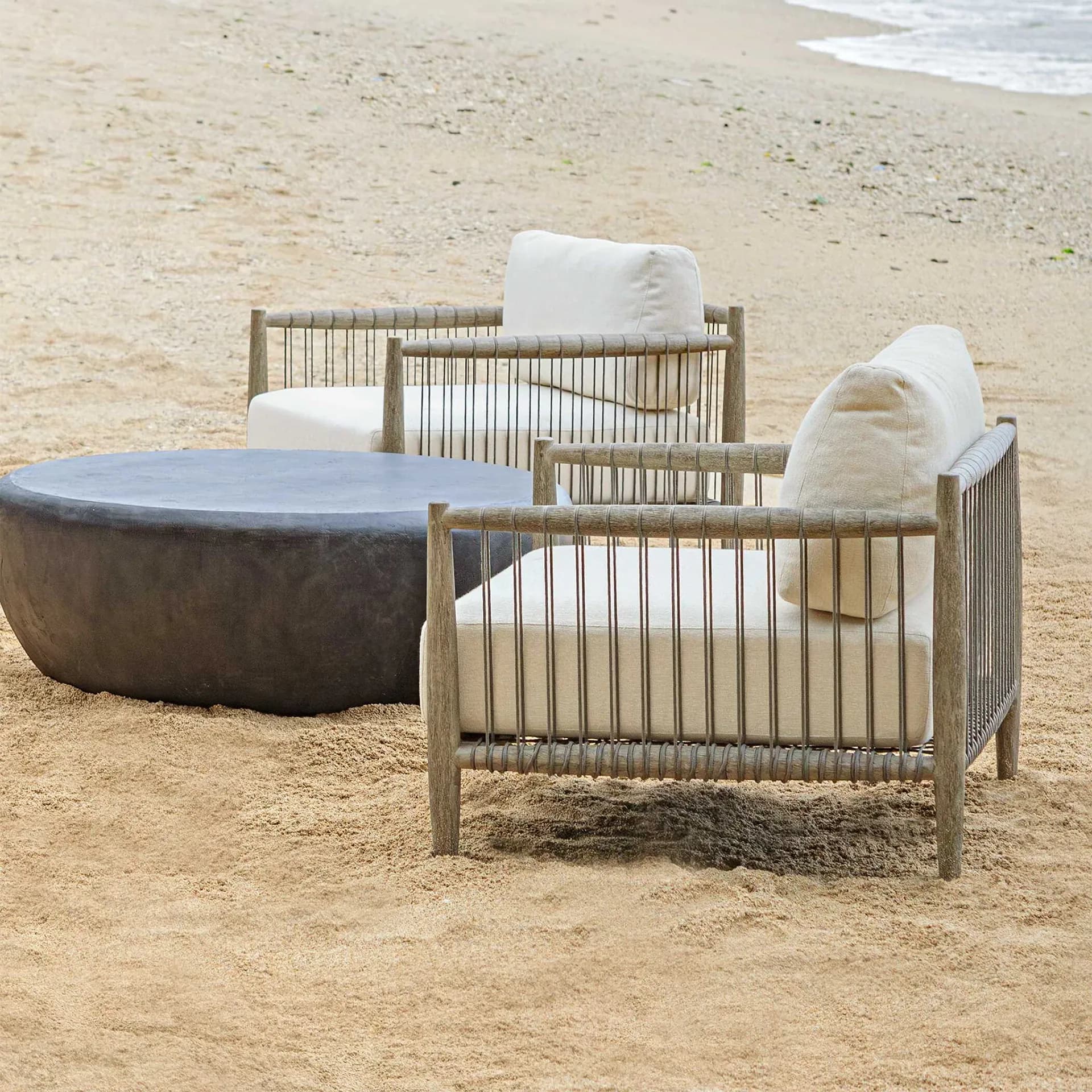
Avoid linen-only or cotton-only upholstery in high-exposure rooms unless the project accepts fading, odor retention, and faster wear. Natural fibers can be beautiful, but in coastal perimeter zones they should be used selectively and with full awareness of their limits.
Performance Leather
Leather can still belong in a coastal home, but it must be chosen carefully. Untreated aniline leather near salt, sun, and humidity is usually a fragile decision.
Specialized outdoor or marine-grade leathers can work in protected, transitional areas: shaded loggias, media rooms, conditioned lounges near the sea, or spaces where the tactile richness of leather is central to the design. The critical requirement is performance data: UV resistance, mildew testing, abrasion rating, and salt or chlorine exposure performance.
When those details are unavailable, a high-end performance textile may be the more honest luxury choice.
Wallcoverings: Beauty Must Breathe
Wallcoverings create softness and acoustic comfort, but in humid coastal homes they also introduce risk.
Standard vinyl wallpaper can become problematic on exterior-facing, air-conditioned walls. When vapor drive, cold interior surfaces, and low-perm wallcoverings meet, moisture can become trapped behind the finish. The result may not be visible immediately. That is precisely why it is dangerous.
For luxury coastal interiors, breathable, PVC-free, nonwoven-backed, or textile wallcoverings are often safer choices. They provide visual depth and refinement without creating the same moisture-trap conditions associated with low-perm vinyl assemblies.
This does not mean every exterior wall must remain plain. It means the wall assembly must be understood. In a beachfront home, what happens behind the surface is part of the design.
Mechanical Systems: The Invisible Material Decision
Humidity control is not separate from interior design. It is one of the most important material-preservation systems in the home.
A beachfront residence with beautiful finishes and poor humidity control will age badly. Metals corrode faster. millwork moves more. textiles retain odor. hidden mold risk increases. electronics and motors suffer. Air conditioning alone is not always sufficient if the system does not manage indoor relative humidity, dew point, and infiltration.
For high-end coastal homes, the mechanical strategy should be integrated early. Dehumidification, fresh-air treatment, filtration, corrosion-resistant HVAC components, proper ventilation of cavities, and protected locations for AV and control equipment all influence the longevity of the interior.
Even shade pockets, grilles, and automation hardware deserve coastal-grade thinking. Anodized or powder-coated aluminum, 316 stainless fasteners, protected motors, and well-drained pockets can prevent hidden salt accumulation from becoming a future maintenance issue.
Luxury automation should not only be seamless. It should be protected.
What to Avoid
In beachfront luxury remodeling, the most expensive mistakes often look good at first.
Avoid polished stone at wet thresholds without traction verification. Avoid standard MDF in humid cabinetry zones. Avoid cheap plated metal hardware. Avoid low-grade stainless near salt air. Avoid vinyl wallcoverings on exterior-facing walls unless the assembly has been engineered for that condition. Avoid ordinary upholstery in rooms that receive strong sun and salt-adjacent use. Avoid assuming any natural stone is appropriate simply because it is expensive.
The beachfront environment does not respect price tags. It responds to chemistry, porosity, movement, exposure, and maintenance.
The Real Definition of Coastal Luxury
A luxury beachfront home should not feel armored. It should not look like a commercial marine facility or a resort lobby pretending to be a residence. The best projects make performance almost invisible.
The porcelain reads as stone. The stainless feels architectural. The bronze ages with intention. The millwork remains crisp. The textiles feel soft. The walls breathe. The air is controlled. The home continues to look calm because its systems were never relying on appearance alone.
That is the science of coastal luxury.
It is not about adding more. It is about choosing better. It is about understanding that the ocean is not just a view; it is an environmental force entering the design brief.
For owners and developers building along the coast, the real question is not whether a material looks expensive in the showroom. The more useful question is whether it will still feel precise, quiet, and credible after years of salt, sun, humidity, and use.
That is where luxury becomes less about surface and more about discipline.
Filed under